
Welcome to JDD Corner, your gateway to a world of dermatology knowledge and insights! JDD Corner is a curated collection of video abstracts, editor picks, Key Opinion Leader (KOL) spotlights, trending articles, and much more. Whether you are a dermatologist, a skincare enthusiast, or simply curious about the latest advancements in dermatology, JDD Corner is your one-stop destination for staying informed and up-to-date with the most exciting developments in the field. Explore our carefully selected content and immerse yourself in the dynamic world of dermatology. Welcome to JDD Corner!
JDD Corner
JDD Corner
Video Abstracts
Introducing an Exciting NEW Opportunity for Our Authors to Connect with Our Readership through a Cutting-Edge Media Channel! Email us at editorial@jddonline.com to get started!
NEW! VIDEO ABSTRACT
Efficacy of a Dual-Serum Cosmetic System in Women With Female Pattern Hair Loss
Hair loss is a widespread condition with a potentially severe psychological burden, especially among women. The chance of suffering from female alopecia increases with menopause, and topical treatments beyond minoxidil are scarce. Over the past several years, new combinations of natural ingredients and patented mixtures have shown promising results to improve hair shedding, thus helping recover self-esteem and confidence.
NEW! VIDEO ABSTRACT
Clinical Evaluation of a Thiamidol-Based Regimen With SPF Compared With SPF Alone for Facial Hyperpigmentation
Hyperpigmentation disorders are common skin concerns that negatively impact patient quality of life and self-perception. Hyperpigmentation results from the overproduction of melanin via a multi-step process with a rate-limiting step catalyzed by tyrosinase.
NEW! VIDEO ABSTRACT
Molecular Insights: Immune and Barrier Dysregulation in Seborrheic Dermatitis
Seborrheic dermatitis(SD) is a chronic inflammatory skin disease that affects sebaceous areas, typically the face and scalp, with an estimated prevalence of 2% to 5%. It is thought to result from a combination of immune dysregulation, barrier dysfunction, and colonization with Malassezia species.1,2
NEW! VIDEO ABSTRACT
Clinical Evaluation of Thiamidol-Containing Formulations for the Visual Management of Facial Hyperpigmentation
Cutaneous hyperpigmentation, which includes melasma, post-inflammatory hyperpigmentation, and solar lentigines, significantly impacts patients’ quality of life.
NEW! VIDEO ABSTRACT
Retrospective Review of Dermal Safety Studies of Organic Sunscreens
Sunscreens can reduce skin cancer and sunburn. Recent studies on dermal penetration have raised concerns about the safety of sunscreens with organic ultraviolet (UV) filters.
NEW! VIDEO ABSTRACT
Perceptions and Recommendations for Sunscreen: A Cross-Sectional Survey of United States Dermatology Healthcare Providers
The dermatology HCPs in this survey strongly support sunscreen use and believe that FDA-approved sunscreens are effective and safe. The social media findings highlight a continued need to improve education on sunscreen use and increase counseling from clinicians on sun protection behaviors.
Author Spotlight
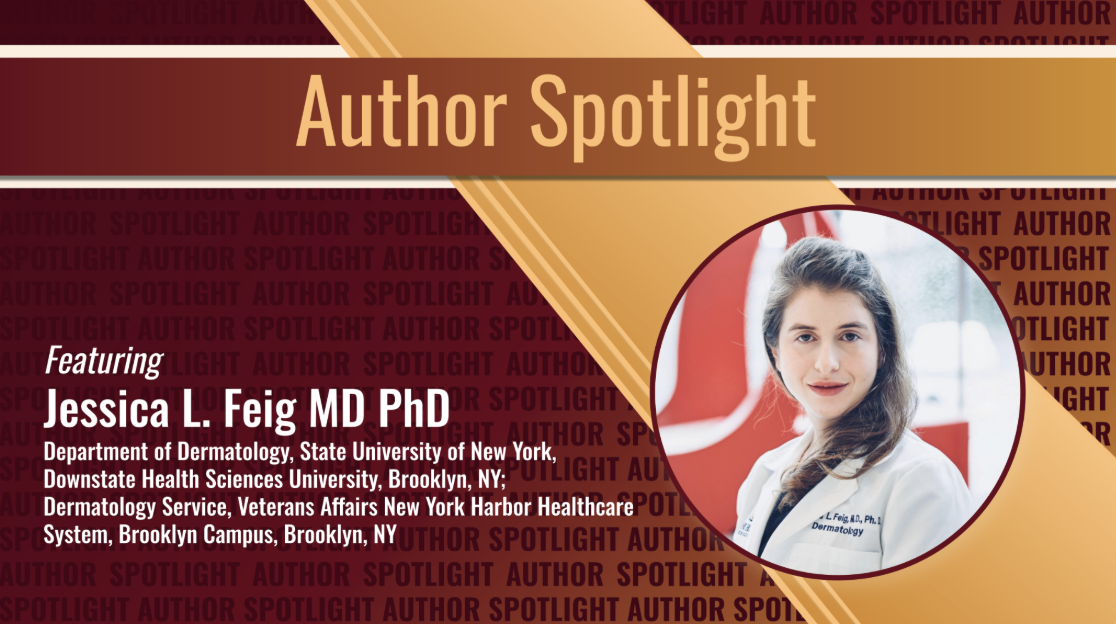
Our current Author Spotlight features Jessica L. Feig MD PhD, one of the co-authors of JAK/STAT Inhibitors Reduce Risk of New-Onset Keloids and Hypertrophic Scars: A Multi-Center Retrospective Cohort Study, published in our September 2026 issue. In addition to the article, Dr. Feig also provided insight about the current state of dermatology and how the field is adapting to new advances in technology and treatments.
Read More
Trending Articles
GLP-1 Receptor Agonist Paradox in Hair Biology: A Biphasic dWAT–Follicle Signaling Hypothesis
Glucagon-like peptide-1 receptor agonists (GLP-1RAs) have transformed obesity and type 2 diabetes management, yet emerging reports of hair loss represent a potential adherence concern. Pharmacovigilance analyses using the FDA Adverse Event Reporting System (FAERS) demonstrate significantly elevated reporting odds ratios for alopecia with semaglutide (ROR: 2.46, 95% CI: 2.14–2.83) and tirzepatide (ROR: 1.73, 95% CI: 1.42–2.09) compared to other antidiabetic agents.1,2
Read More
Red Light Therapy in Cosmetic Dermatology: Marketing Claims Backed by Evidence?
Red light therapy (RLT) is a non-invasive modality that uses visible red wavelengths (approximately 620–700 nm) to modulate cellular activity. By stimulating mitochondrial cytochrome c oxidase, RLT increases adenosine triphosphate production, regulates reactive oxygen species, and activates downstream pathways involved in inflammation control, tissue repair, and collagen synthesis. RLT has rapidly expanded into cosmetic dermatology and consumer wellness markets with widespread direct-to-consumer marketing. This review synthesizes current evidence on the mechanisms and cosmetic applications with particular attention to discrepancies between peer-reviewed data and commercial claims.
Read More
Risk Factors Associated With Hyaluronic Acid Filler–Related Delayed Complications: A Literature Review and Expert Consensus
Delayed complications associated with hyaluronic acid (HA) fillers are a concern in aesthetic medicine. However, clinical strategies for mitigation remain inconsistent, and guidelines often make recommendations that may lack the support of robust evidence. To address this gap, a multidisciplinary expert safety council convened to develop evidence-based recommendations aimed at reducing the delayed complication risk of soft-tissue augmentation with fillers, noting which recommendations are uncertain due to lack of evidence.
Read More
Botulinum Toxin in Facial Paralysis: A Neuroaesthetic Framework for Functional, Therapeutic, and Aesthetic Correction
Facial paralysis (FP) produces functional deficits and facial asymmetry that may include neuromuscular discoordination with synkinesis, painful muscle contractions, disturbing facial spasms, and autonomic misdirection such as gustatory lacrimation. Although Botulinum toxin A (BTX-A) is widely used in dermatology for aesthetic indications, its therapeutic and functional role in facial paralysis is less commonly incorporated within a clinical unified framework.
Read More
Topical Carboxytherapy as an Adjunct to Skin Recovery Post-CO2 Laser Fractional Resurfacing
Topical carboxytherapy, a transcutaneous carbon dioxide (CO2) delivery system, may support skin repair and regeneration, yet its role as an adjunct to fractional laser treatment remains underexplored.
Read More
A Novel Moisturizer Formulated With Micronized Centella asiatica and Mandelic Acid Improves Mature, Crepey Skin
Dermatoporosis is a condition of fragile, aging skin that manifests as altered pH, wrinkles, laxity, easy bruising, and hyperpigmentation. This study evaluated efficacy, safety, and subject perception after the use of a novel cream, GC (Galderma Laboratories, LP, Fort Worth, TX), on subjects with mature, aging skin.
Read More
Recent News
Editor's Picks
Video Pearls
Tough Day at the Office: Lupus, Sarcoidosis, and a Side of Morphea
Watch as Dr. Friedman shares basic principles to managing three distinct diseases – cutaneous lupus, sarcoidosis and linear morphea. Learn why you need to do a good review of organ systems and be prepared to phone a friend (or more) across the aisle in medicine.
Tips for Providing Better Atopic Dermatitis Care
With the growing list of therapeutic options, Dr. Friedman encourages clinicians to go back to the basics and address one of the greatest challenges — treatment adherence.
Acne and Diet
Adam Friedman, professor and chair of dermatology at GW School of Medicine and Health Sciences. Dr. Friedman says acne is an evidence-based example of the saying “you are what you eat.”
Crushing It In The Capital: Lessons From Residency Translated
Dr. Friedman provides his tips for remaining calm during the craziest of office visits. He also shares why being fun, creative and an off-label bandit matters.
New Innovations in Hyperpigmentation
Dr. Chilukuri outlines at-home and in-office treatments to address hyperpigmentation, including newly developed therapies.