JDD Webinars

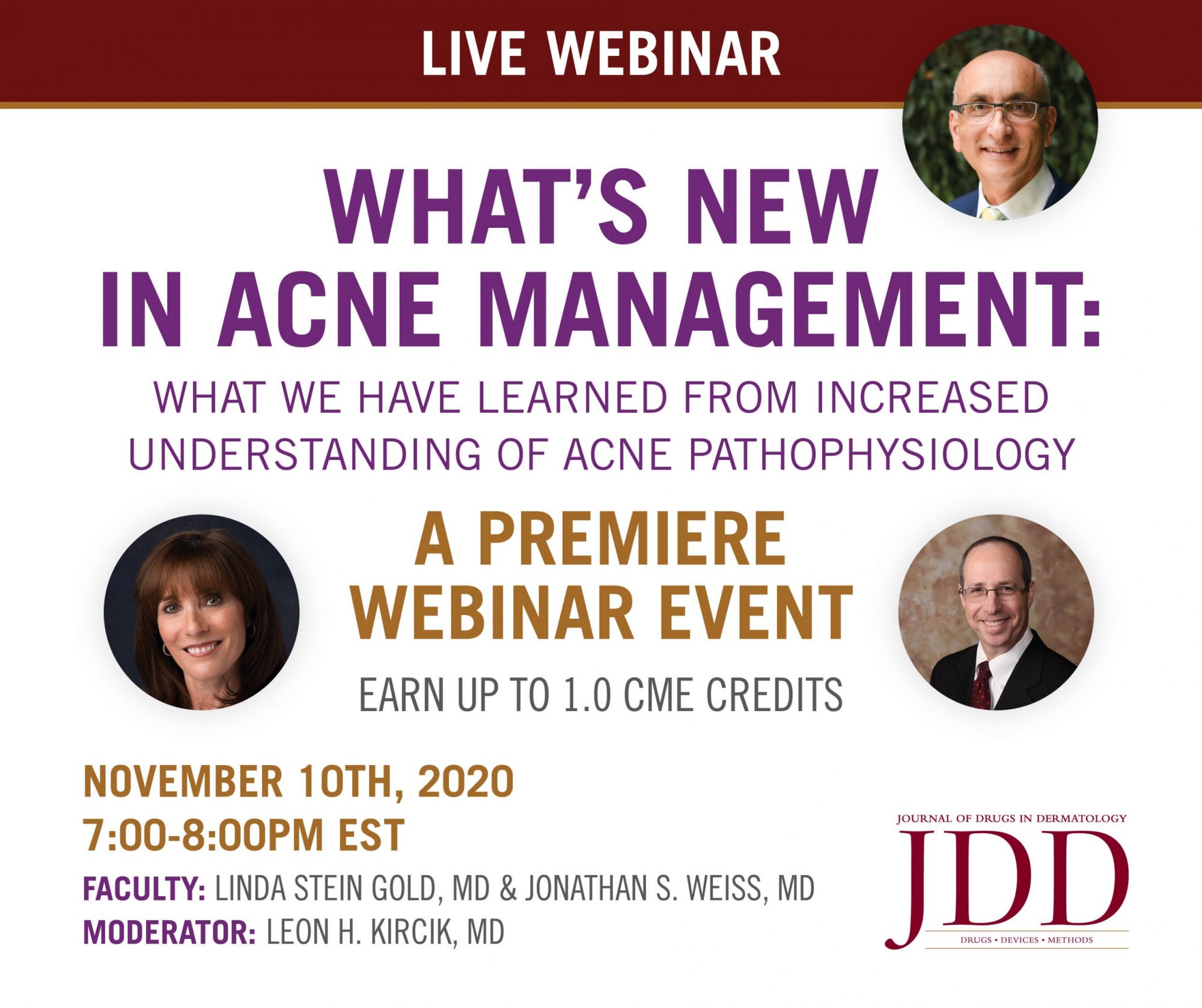
What’s New in Acne Management: What We Have Learned from Increased Understanding of Acne Pathophysiology

By October 28, 2020April 21st, 2021No Comments

Featured Article

What's New in Acne Management:

What We Have Learned From Increased Understanding of Acne Pathophysiology

Join Drs. Leon H. Kircik, Linda Stein Gold, and Jonathan S. Weiss as they discuss the medical interventions generally targeting one or more of the key factors contributing to the development of acne lesions: follicular hyperproliferation and abnormal desquamation (topical and oral retinoids, azelaic acid, salicylic acid, hormonal therapy), increase sebum production (oral isotretinoin, hormonal therapy), C. acnes proliferation (benzoyl peroxide, topical and oral antibiotics, azelaic acid) and inflammation (oral isotretinoin, oral tetracyclines, topical retinoids, azelaic acid).

Acne pathogenesis is multifactorial and not clearly understood; a key factor includes genetics and may result as in interplay of release of inflammatory mediators into the skin, follicular hyperkeratinization with subsequent plugging of the follicle, Cutibacterium acne (C. acnes), formerly Propionibacterium acnes or P. acnes, follicular colonization and excess sebum production.

C. acnes has been shown to mediate inflammatory processes at the site of the sebaceous follicle contributing to the formation of free radical species and generating pro-inflammatory cytokines. Excess sebum production and C. acnes colonization lead to the formation of microcomedones leading to the development of open or closed comedones, inflammatory papules, pustules and cysts characteristic of acne.
Acne severity and grade (comedonal, papulopustular, mixed, nodular), skin type, presence of acne scarring and postinflammatory hyperpigmentation, menstrual cycle history (in women), skin current skin care regimen are factors influencing treatment with classes of topical agents include: comedolytic (anticomedogenic), antimicrobial, antibiotic and antiinflammatory; each impact on the four main pathogenic features of acne.

FACULTY


Leon H. Kircik, MD

Clinical Professor of Dermatology
Indiana University School of Medicine
Mount Sinai Medical Center, New York, NY
Physicians Skin Care, PLLC
Louisville, KY


Linda Stein Gold, MD

Director, Dermatology Clinical Research
Henry Ford Health System
Detroit, Michigan


Jonathan S. Weiss, MD

Adjunct Assistant Clinical Professor of Dermatology
Emory University School of Medicine
Atlanta, GA
President & Co-Managing Partner
Georgia Dermatology Partners
(Formerly, Gwinnett Dermatology, PC)

Watch Now

You May Also Like

Cell-Free Blood Cell Secretome (BCS) Counteracts Skin Aging and Restores Firmness and Elasticity

| Featured Articles, Latest News, Skincare | No Comments
From the Vault: Prospective single arm study reports sustained gains in firmness and hydration after cell free autologous injections We pulled this article from the JDD vault. A prospective, single…
Journal of Drugs in Dermatology JDD featuring Hydroquinone and Emerging Depigmenting Agents: Clinical Guidelines, Regulatory History, and Global Safety Considerations

Hydroquinone and Emerging Depigmenting Agents: Clinical Guidelines, Regulatory History, and Global Safety Considerations

| Dyspigmentation, Featured Articles, Latest News | No Comments
Rethinking Hydroquinone: A JDD Review Every Dermatologist Should See Did you catch the latest JDD review on hydroquinone? This concise review revisits hydroquinone’s place in treating hyperpigmentation, examining its clinical…

Patient Interest in Dermatologists in the United States: A 20-Year Google Trends and Workforce Analysis

| Derm Community, Featured Articles, Latest News, Social and Technology | No Comments
New JDD Analysis Links Google Search Interest to Dermatologist Shortages by State Have you read this article from the JDD? A recent paper examines geographic variation in patient interest for…

Leave a Reply