
Extended Pembrolizumab Duration Tied to Lower Mortality in Stage III and IV Melanoma: JDD Report
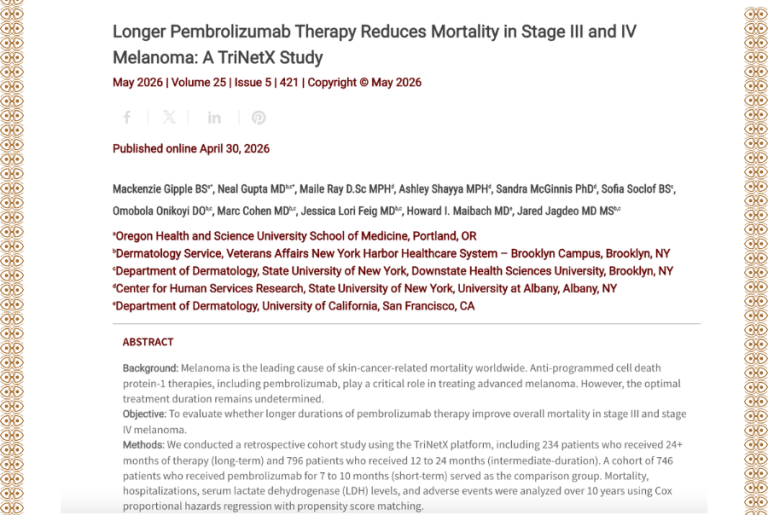
Could extending pembrolizumab improve survival? This JDD is a must read. A new retrospective analysis using the TriNetX platform examined whether longer courses of pembrolizumab affect outcomes in stage III and stage IV melanoma. The study compared patients receiving 24 or more months of therapy, those treated for 12 to 24 months, and a shorter-duration group treated for 7 to 10 months.
Among 1,776 patients, longer therapy was associated with lower overall mortality. The long-duration cohort (n = 234) showed a hazard ratio of 0.41, 95% CI 0.27 to 0.62, versus the short-term group (n = 746). Intermediate-duration therapy (n = 796) was also associated with reduced mortality, HR 0.47, 95% CI 0.37 to 0.60, and a lower rate of hospitalizations, HR 0.74, 95% CI 0.68 to 0.93. Differences in serum lactate dehydrogenase levels and adverse events between groups did not reach statistical significance.
For practicing dermatologists and dermatology healthcare professionals, these findings highlight a potential survival benefit linked to extended PD-1 blockade but stop short of establishing causation. The analysis is retrospective and subject to the usual limitations of real-world datasets, so prospective trials are needed to confirm whether extended pembrolizumab should become standard for advanced melanoma.
If you manage patients on anti-PD-1 therapy, the full JDD article is worth reviewing to examine methodology, subgroup analyses, and implications for follow-up and shared decision-making. Read the complete study in the Journal of Drugs in Dermatology to evaluate how this evidence might influence your clinical practice.
Blog write-up assisted by AI