
Post-Procedure Optimization: Enhancing Laser Resurfacing Outcomes With Topical Carboxytherapy
Have you read this recent article from the JDD regarding post-laser skin recovery protocols?
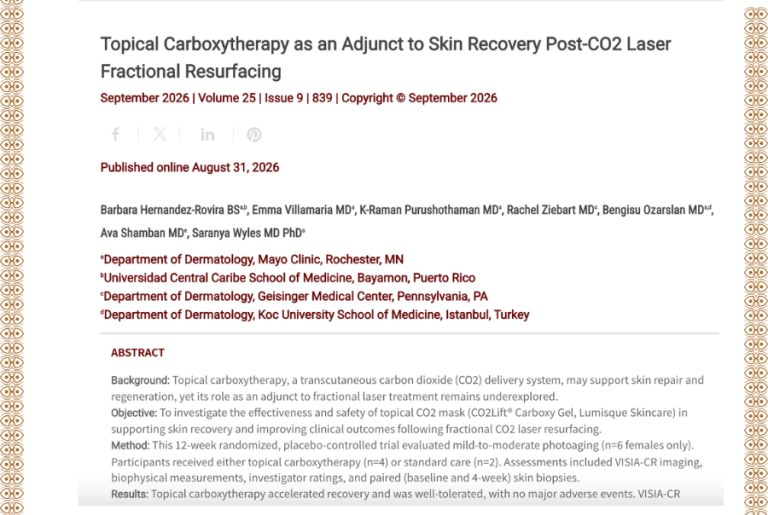
As aesthetic dermatology continues to advance, optimizing patient recovery and procedural outcomes remains a primary priority for aesthetic clinicians. Fractional CO2 laser resurfacing is well recognized for treating photoaging, yet managing post-treatment downtime and epidermal barrier restoration continues to pose clinical challenges. A recent clinical investigation published in the Journal of Drugs in Dermatology highlights the potential role of topical carboxytherapy as a therapeutic adjunct to fractional laser resurfacing.
This 12-week randomized, placebo-controlled trial evaluated the efficacy and safety of a transcutaneous carbon dioxide delivery system (CO2Lift® Carboxy Gel, Lumisque Skincare) in subjects undergoing fractional CO2 laser procedures. Researchers utilized a robust combination of VISIA-CR imaging, biophysical barrier evaluations, physician clinical ratings, and paired skin biopsies collected at baseline and week 4 to track healing trajectories.
The study demonstrated that adjunctive topical carboxytherapy significantly accelerated post-procedure recovery compared to control standard care. Subjects receiving the topical CO2 gel exhibited faster resolution of erythema, rapid normalization of transepidermal water loss, and consistent skin pH stability. Histological analysis further supported these findings, revealing increased epidermal thickening and enhanced rete ridge formation. Physician investigators observed statistically significant improvements in healing timelines, overall clinical assessments, and global aesthetic scores.
These preliminary findings indicate that transcutaneous CO2 delivery may serve as an effective tool for reducing post-laser downtime and strengthening barrier repair in clinical practice. Read the full study in the Journal of Drugs in Dermatology to examine the detailed histological data, biophysical metrics, and treatment protocols.
Blog write-up assisted by AI