
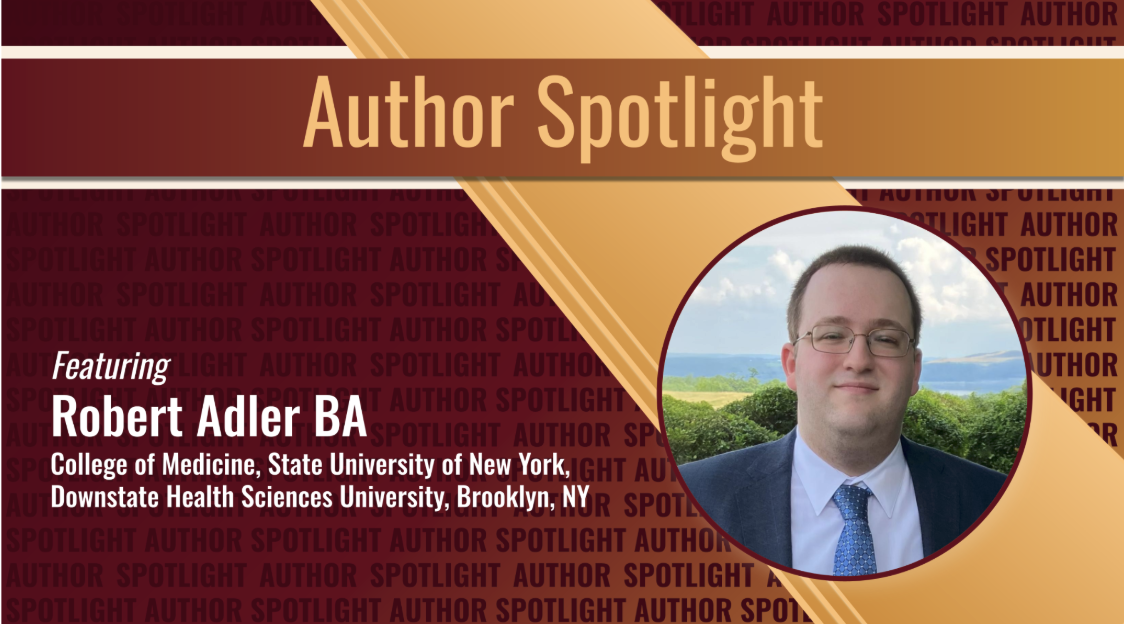
Our current Author Spotlight features Robert Adler BA, one of the co-authors for Progression to Psoriatic Arthritis Among Psoriasis Patients Treated With JAK Inhibitors Compared With IL-17/23 Inhibitors, published in our November 2026 issue. In addition to the article, Robert also provided insight about the current state of dermatology and how the field is adapting to new advances in technology and treatments.
How do you see artificial intelligence and digital dermatology evolving in clinical practice over the next five years?
Artificial intelligence has already made significant inroads into the field, from smartphone-based apps for facial analysis and lesion stratification to recent pilots integrating AI into prescription management. Ensuring proper supervision of these systems will be integral towards maintaining effective use and integration into clinical workflows.
Of all your research findings, are there any surprising or unexpected results that changed your perspective on the topic?
The most surprising finding in our paper was that JAK inhibitors were associated with a lower risk of developing psoriatic arthritis than IL-17 inhibitors, while IL-23 inhibitors had the lowest overall incidence of psoriatic arthritis. This challenged my assumption that effective skin treatment necessarily translates into better prevention of systemic and joint disease and highlights the need for further research to determine whether these associations reflect true preventive effects.
What role do you think social determinants of health play in dermatologic treatment outcomes, and how can dermatologists better address these challenges?
Context is always key. Understanding where every patient comes from outside of the encounter has a heavy impact on diagnosis, care and treatment access, and barriers to treatment response. Teledermatology is one of those areas that has the ability to greatly reduce barriers for rural populations or those with transportation difficulties. There are also many philanthropic programs and resources for patient access that have been helpful at bridging patient barriers to get the care they need.
If you could collaborate with any other specialty or field to advance dermatologic research, which would it be and why?
Dermatology sits at the intersection of multiple disciplines, but I would be particularly interested in collaborating with immunology and rheumatology to better understand disease mechanisms and develop more targeted therapies. Our paper identified that certain classes of immunobiologics and small molecules are associated with reduced risk to progression for PsA, suggesting a role for more targeted interventions for certain patients. Combining clinical insights with advances in immune profiling could help us better predict treatment response and move toward more personalized dermatologic care.
What is a piece of advice you wish you had received earlier in your dermatology career?
Though I am still a medical student and just starting out, I found mentorship to be extremely helpful in my journey to dermatology. I encourage everyone to find mentors as early as possible. We are the culmination of all that came before us, and so I am indebted to my mentors for their guidance and support.
Outside of clinical practice and research, what excites you most about the future of dermatology?
What excites me most about the future of dermatology is the potential for groundbreaking treatments that can improve long-term outcomes of patients. I am also passionate about making dermatologic care more accessible and ensuring that patients from all backgrounds have access to timely diagnoses, effective treatments, and the opportunity to feel confident in their skin.