Featured Article
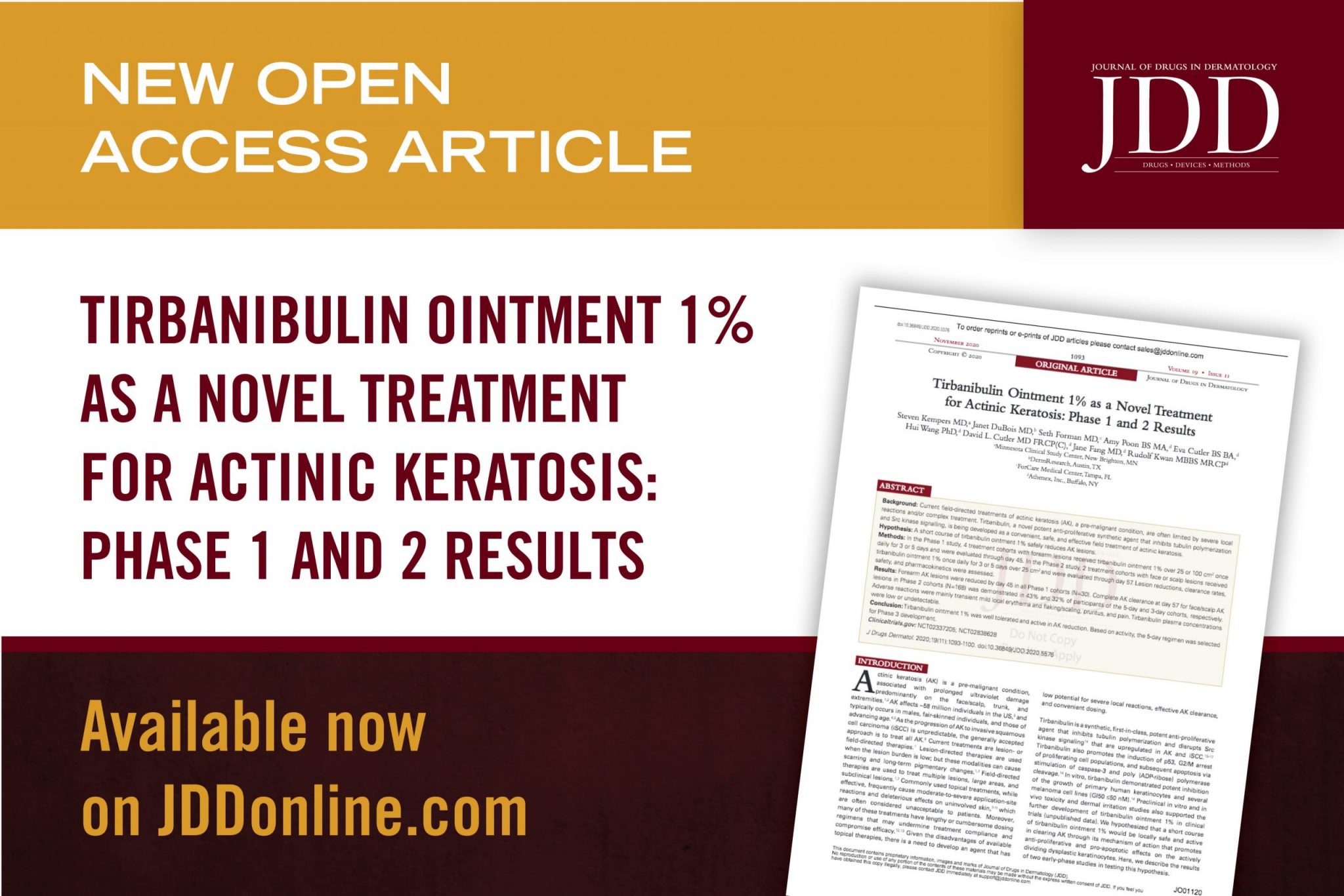
Current field-directed treatments of actinic keratosis (AK), a pre-malignant condition, are often limited by severe local reactions and/or complex treatment. Tirbanibulin, a novel potent anti-proliferative synthetic agent that inhibits tubulin polymerization and Src kinase signalling, is being developed as a convenient, safe, and effective field treatment of actinic keratosis.
Current field-directed treatments of actinic keratosis (AK), a pre-malignant condition, are often limited by severe local reactions and/or complex treatment. Tirbanibulin, a novel potent anti-proliferative synthetic agent that inhibits tubulin polymerization and Src kinase signalling, is being developed as a convenient, safe, and effective field treatment of actinic keratosis.
Actinic keratosis (AK) is a pre-malignant condition, associated with prolonged ultraviolet damage predominantly on the face/scalp, trunk, and extremities. AK affects ~58 million individuals in the US, and typically occurs in males, fair-skinned individuals, and those of advancing age. As the progression of AK to invasive squamous cell carcinoma (iSCC) is unpredictable, the generally accepted approach is to treat all AK.
Current treatments are lesion- or field-directed therapies. Lesion-directed therapies are used when the lesion burden is low; but these modalities can cause scarring and long-term pigmentary changes. Field-directed therapies are used to treat multiple lesions, large areas, and subclinical lesions.
Commonly used topical treatments, while effective, frequently cause moderate-to-severe application-site reactions and deleterious effects on uninvolved skin, which are often considered unacceptable to patients. Moreover, many of these treatments have lengthy or cumbersome dosing regimens that may undermine treatment compliance and compromise efficacy.
Given the disadvantages of available topical therapies, there is a need to develop an agent that has low potential for severe local reactions, effective AK clearance, and convenient dosing.
Get More from the JDD
Get the latest dermatology news delivered straight to your Inbox – sign up for the JDD Newsletter.
Discover the latest research, exclusive articles from leading dermatology experts, popular Podcast episodes, free CME activities, and more!


You May Also Like