Supported By

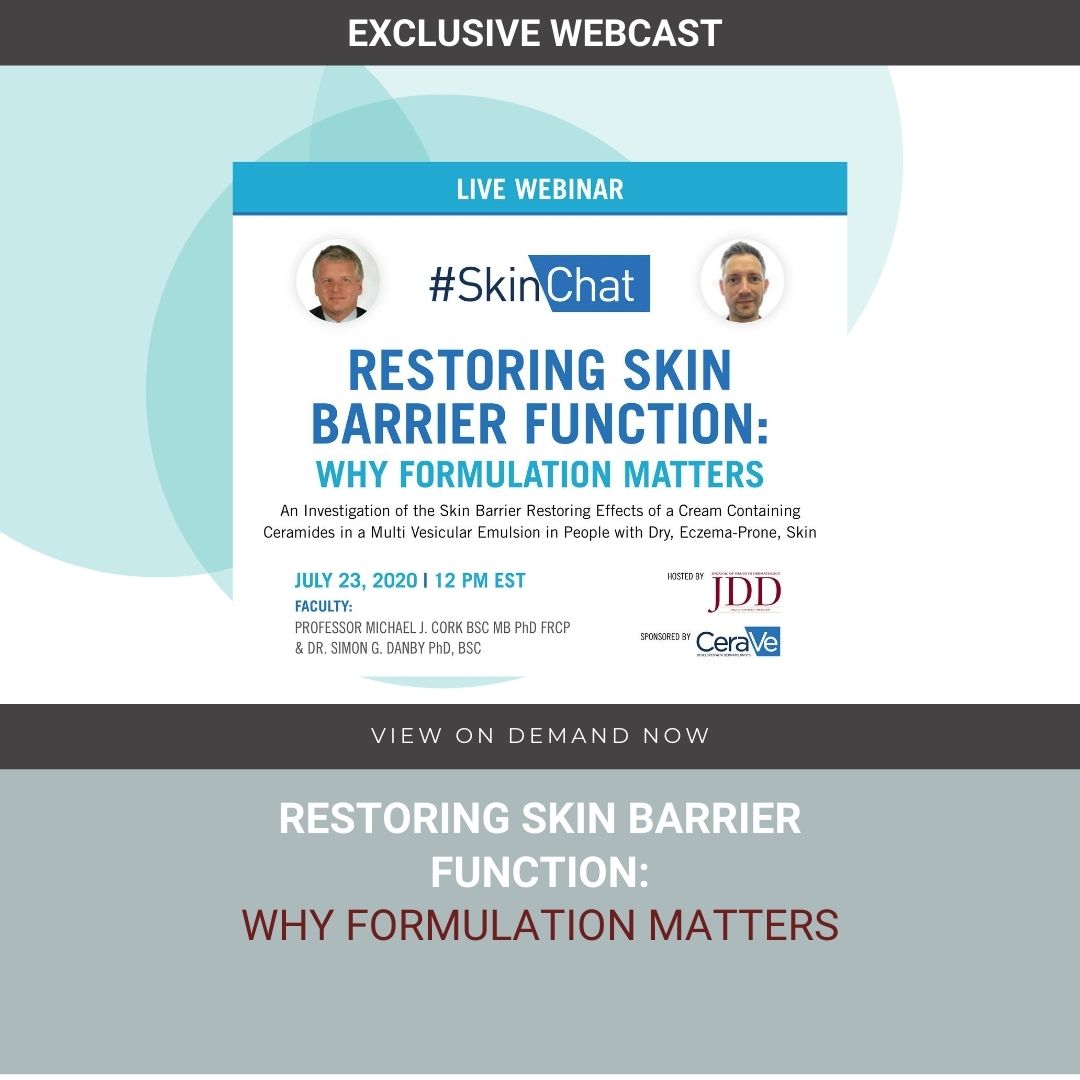
Restoring Skin Barrier Function: Why Formulation Matters
With the implications of hand-washing protocol during the COVID-19 pandemic, proper skin-barrier restoration is essential, especially for people with dry, eczema-prone skin.
Tune in as Professor Michael J. Cork BSC MB PhD FRCP and Professor Simon G. Danby discuss the skin-barrier restoring effect of a cream containing ceramides in a multi-vesicular emulsion for people with eczema-prone skin, as well as other skin conditions that require skin-barrier restoration.
FACULTY
Professor Michael J. Cork BSC MB PhD FRCP
Joined the University of Sheffield in 1991 as a lecturer in dermatology whilst continuing as a practising dermatologist for the NHS in Sheffield. Previously, a Registrar in Dermatology at the Royal Hallamshire Hospital, Sheffield, and a Registrar in Respiratory General Medicine at Leeds General Infirmary.
Professor Cork has been closely involved with research in many areas of dermatology; including Atopic Eczema(dermatitis), Psoriasis, Vitiligo and the Genetics of Skin Disease. Major current research work is aimed at identifying gene–environment interactions in the development of atopic dermatitis leading to skin barrier breakdown and the understanding of how topical agents interact with the skin barrier; using this information to enhance the treatment of atopic dermatitis.
Currently the Head of Sheffield Dermatology Research in the Department of Infection, Immunity & Cardiovascular Disease at the University of Sheffield Medical School and Honorary Consultant Dermatologist to both Sheffield Children´s Hospital NHS Foundation Trust and to Sheffield Teaching Hospitals NHS Foundation Trust.

Professor Simon G. Danby PhD, BSC
Originally trained in biochemistry and molecular biology, Professor Danby joined the University of Sheffield in 2005 as a post-doctoral scientist in the Academic Unit of Biomedical Genetics.
In this position, he worked exclusively for York Pharma on the early stage development of novel therapeutics and diagnostics for atopic dermatitis, psoriasis and malignant melanoma.
In 2009, he joined the Academic Unit of Dermatology Research as a post-doctoral Research Associate. The focus of his research in this role was improving our understanding of the structure and function of the epidermal (skin) barrier and its role in the development of disorders such as atopic dermatitis (AD).
At the beginning of 2012, Professor Danby was awarded a 3-year unencumbered research fellowship from Johnson & Johnson to continue my research on the skin barrier and set up a dedicated research facility for conducting human skin research.
Since then, he has continued to conduct and lead translational dermatology research as an independent fellow.
Watch On Demand
You May Also Like