
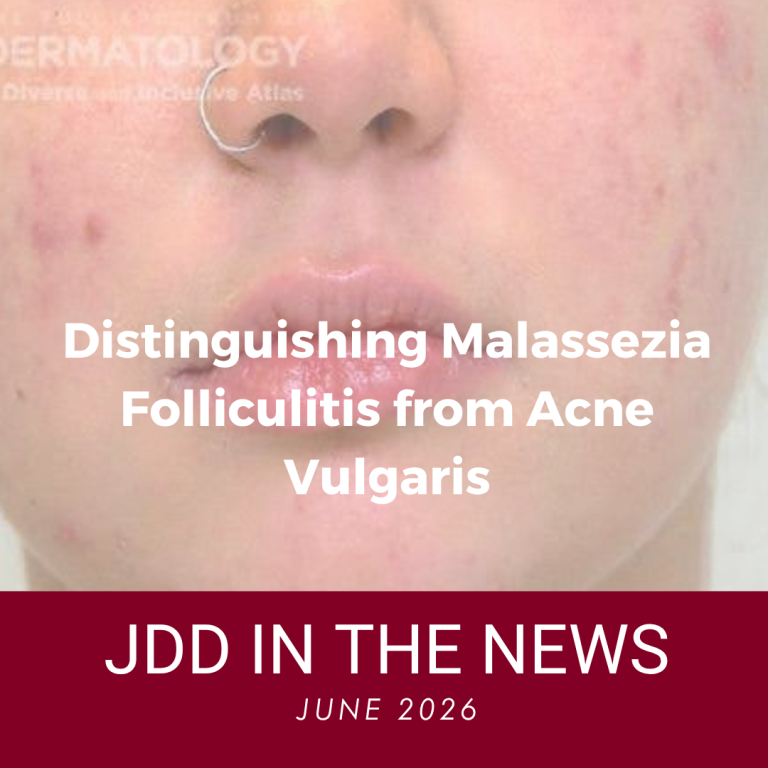
Dermatology Times highlighted three Journal of Drugs in Dermatology studies in recent articles, including an examination of “fungal acne.” In the study, “Malassezia Folliculitis Presentation, Diagnosis, and Treatment: A Review of “Fungal Acne,” the authors conducted a narrative review to summarize prevalence, risk factors, pathogenesis, diagnosis, and treatment options. The authors were motivated by increased social media interest in Malassezia folliculitis (MF), and the potential for the application of antifungal products without a confirmed diagnosis. Clinically, MF is often mistaken for acne vulgaris, and the mechanisms of MF pathogenesis —
sebum production, lipase activity, and inflammation — also contribute to the pathogenesis of acne vulgaris. The authors found prevalence varies by geographic region with hot, humid weather as two of the risk factors. (Hair follicle occlusion and immunocompromise were also noted as risk factors.) Clinical presentation and tests, such as direct microscopy and histopathology, were noted to confirm an MF diagnosis. According to the authors, acne topicals that target the pathogenesis of both acne vulgaris and MF may be beneficial.
Dermatology Times also wrote about a recent JDD case report on necrotizing fasciitis (NF). The study, “Time is Tissue: A Representative Case Report Highlighting the Importance of Early Clinical Diagnosis of Necrotizing Fasciitis,” presented the case of a 50-year-old woman who experienced severe pain in her left thigh for four days along with a limited ability to bear weight, fever, fatigue, body aches, and diarrhea. The patient was eventually diagnosed at the hospital
with necrotizing fasciitis due to group A streptococcus. The authors write that the case demonstrates the importance of early diagnosis and treatment, as well as the failure of oral antibiotics due to a protein variant. While the patient has now recovered, it took high-dose IV antibiotics for an additional four weeks for resolution. The authors recommend primary care and emergency room physicians have a “high index of suspicion” because making a diagnosis in the disease’s early stages can be difficult without clear clinical and diagnostic evidence. Surgical
exploration is ultimately needed for an NF diagnosis.
Finally, Dermatology Times profiled a JDD study on reducing pain during PDT with 5-aminolevulinic acid (ALA). The study, “The Interventions to Minimize Pain During Photodynamic Therapy With 5-Aminolevulinic Acid for the Treatment of Cutaneous Diseases,” was conducted by Neal Bhatia, MD. His review outlines published recommendations, studied modifications, as well as his own recommendations from research and clinical practice. He recommends careful
patient identification and refrigerated hypochlorous spray for topical pain control. He also finds antihistamines useful to reduce immediate edema and itching. While not yet researched in a controlled clinical trial, Dr. Bhatia says “talk-esthesia” may be effective, and there are topicals that may be promising as well. The use of a skin-soothing spray that does not contain a skin sensitizer for several days after treatment can reduce burning and irritation, and Dr. Bhatia always recommends his PDT patients wear sunscreen.