
Early clinical mapping of exosome therapies in dermatology points to promise and questions
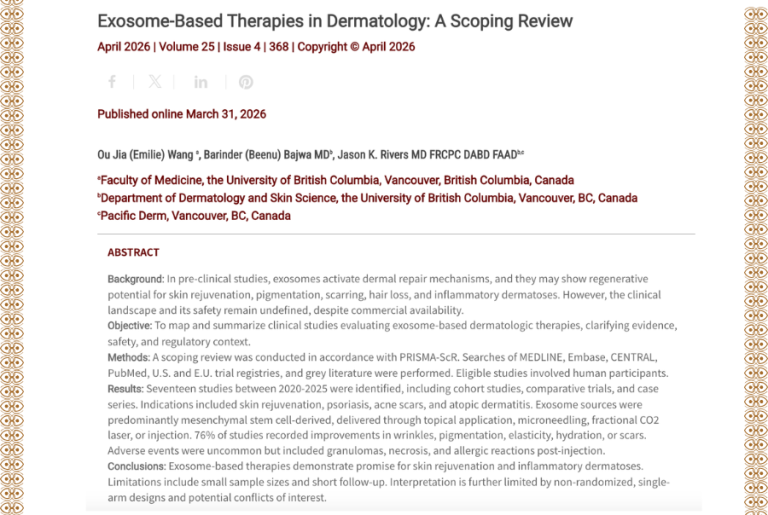
Have you seen this JDD article on exosome-based dermatologic therapies? A scoping review summarized human clinical work to date, providing a concise resource for dermatologists and dermatology healthcare professionals who are following regenerative approaches and adjunctive treatments for skin rejuvenation and inflammatory skin disease.
The review followed PRISMA ScR methodology and searched major databases, trial registries, and grey literature. Seventeen studies published between 2020 and 2025 met inclusion criteria and covered indications including skin rejuvenation, psoriasis, acne scars, and atopic dermatitis. Most exosomes came from mesenchymal stem cell sources and were delivered topically, through microneedling, combined with fractional CO2 laser, or by injection. Approximately three quarters of studies reported improvements in wrinkles, pigmentation, elasticity, hydration, or scar appearance. Serious adverse events were uncommon, though reports included granulomas, tissue necrosis, and allergic reactions after injection.
The authors highlight encouraging signals for exosome therapy but emphasize limitations that practicing clinicians should note: small cohorts, short follow up, largely non randomized single arm designs, and potential conflicts of interest. The review also frames the current regulatory and safety landscape, which remains evolving even as commercial offerings expand.
For clinicians evaluating novel biologic and regenerative options for patients, this article offers a compact evidence map and a cautionary perspective on interpretation. Review the full JDD review to examine study methods, safety details, delivery protocols, and regulatory commentary before considering clinical integration or patient discussions about exosome therapy in routine dermatology practice.
Blog write-up assisted by AI