
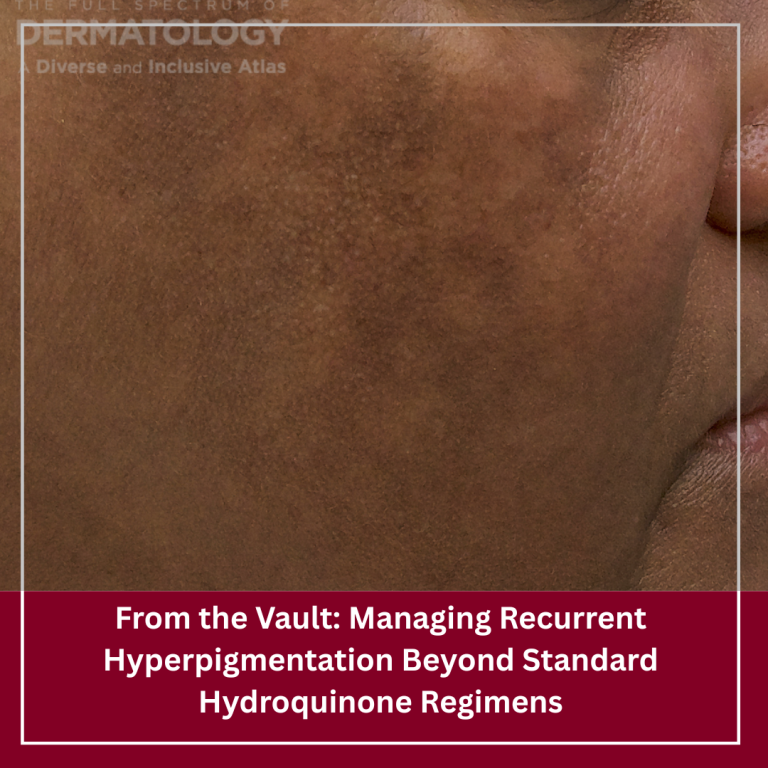
From the Vault: Managing Recurrent Hyperpigmentation Beyond Standard Hydroquinone Regimens
Given its complex pathogenesis, chronicity, and high rates of recurrence, melasma remains one of the most challenging conditions in aesthetic and medical dermatology. While topical hydroquinone long served as the gold-standard first-line intervention for controlling relapses, its potential for local side effects and long-term safety concerns frequently limits sustained use, leaving clinicians in search of durable alternatives.
From the JDD Vault, we are highlighting an article that focuses on filling these key therapeutic gaps. Titled Topical Tranexamic Acid in Melasma: Bridging Knowledge Gaps for Complex Patient Profiles, the review synthesizes current evidence on topical tranexamic acid (TXA) as an effective long-term management strategy, particularly for patients with refractory disease or prior treatment failures.
The paper outlines the clinical utility of topical TXA both as a monotherapy and in combination with other active synergistic ingredients, including 2% formulations utilizing novel delivery technologies to optimize skin penetration. By targeting the vascular and inflammatory components of hyperpigmentation, topical TXA offers a safe, well-tolerated option for long-term maintenance.
Read the full article to explore specific patient profiles, combination strategies, and clinical recommendations for your practice.
Blog write-up assisted by AI