
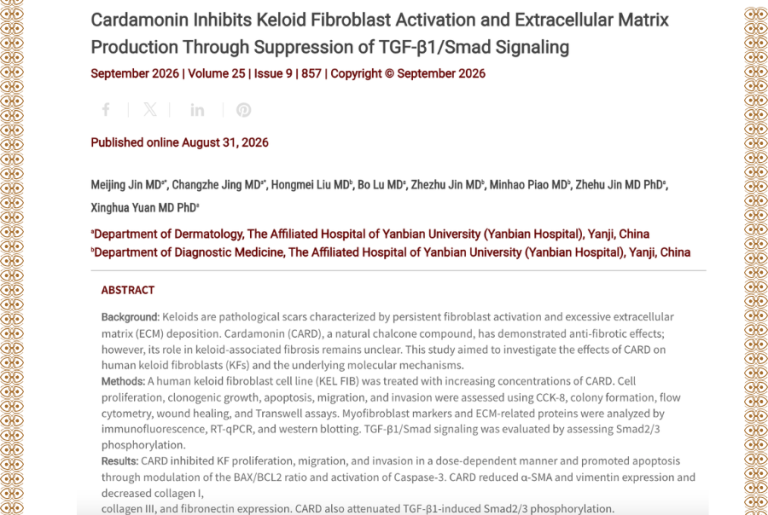
Unlocking New Possibilities in Keloid Therapy: The Potential of Cardamonin
Have you read this latest research highlight from the Journal of Drugs in Dermatology? Keloids remain one of the most challenging conditions in clinical practice, often causing significant frustration for both clinicians and patients due to high recurrence rates and limited targeted pharmacological options. Modern research continues to explore natural compounds that might interrupt the molecular pathways driving persistent dermal fibrosis.
A recently published study in the JDD investigates cardamonin, a natural chalcone compound, and its specific impact on human keloid fibroblasts. Persistent fibroblast activation and excessive extracellular matrix deposition are central to keloid pathogenesis. Researchers set out to evaluate whether cardamonin could modulate these core cellular behaviors and to map out the precise molecular mechanisms behind its activity.
Using human keloid fibroblast cell lines, the study assessed key markers of fibrosis, cell survival, and tissue remodeling. The results demonstrate that cardamonin influences multiple cellular pathways, showing a dose dependent suppression of fibroblast proliferation, migration, and invasive capacity. Additionally, the compound appears to influence apoptotic signaling mechanisms and downregulate critical extracellular matrix components, including collagen types I and III, fibronectin, and alpha smooth muscle actin.
Most notably, the investigation highlights how cardamonin interacts with the TGF-beta1 and Smad signaling cascade, a primary driver of keloid formation. For dermatology providers seeking to stay at the forefront of emerging anti-fibrotic therapies, this study offers valuable insights into potential future treatment avenues.
Head over to the JDD online journal to explore the full study details, methodology, and scientific analysis.
Blog write-up assisted by AI