
New Data on Acne Linked to Oral JAK Inhibitors: What Dermatology Clinicians Should Know
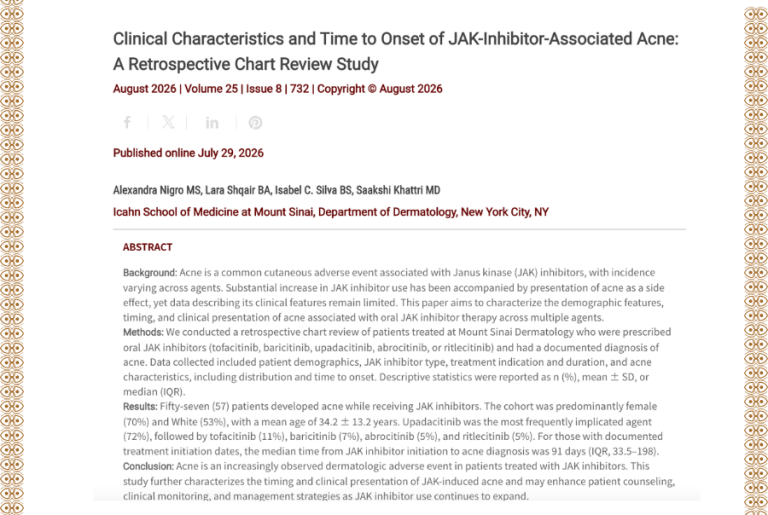
Have you read this article from the JDD? Acne is emerging as a notable cutaneous adverse event in patients receiving oral JAK inhibitors, and a new retrospective review adds useful clinical context for dermatology practices. As JAK inhibitor prescribing continues to expand across inflammatory skin disease, understanding when acne may appear and which patients are affected is increasingly relevant for dermatologists and dermatology healthcare professionals.
In this study from Mount Sinai Dermatology, investigators reviewed patients treated with oral JAK inhibitors who later developed acne. The cohort included multiple agents, with upadacitinib appearing most frequently in the chart review. The report also highlights that acne was seen predominantly in adult women and that onset often occurred weeks to months after treatment began, information that may be helpful when counseling patients starting therapy.
While the abstract does not suggest a single uniform acne pattern, it does underscore an important point for daily practice: acne may be more common than previously recognized in the setting of oral JAK inhibitor use, and it may warrant closer monitoring during follow-up visits. For clinicians managing patients on tofacitinib, baricitinib, upadacitinib, abrocitinib, or ritlecitinib, this study offers a timely reminder to ask about new eruptions and document timing carefully.
For practicing dermatologists looking to stay ahead of evolving adverse event profiles, this JDD article is worth a closer look. Read the full paper to learn more about the clinical presentation, timing, and demographics behind JAK inhibitor associated acne and consider how these findings may inform patient counseling in your own practice.
Blog write-up assisted by AI