
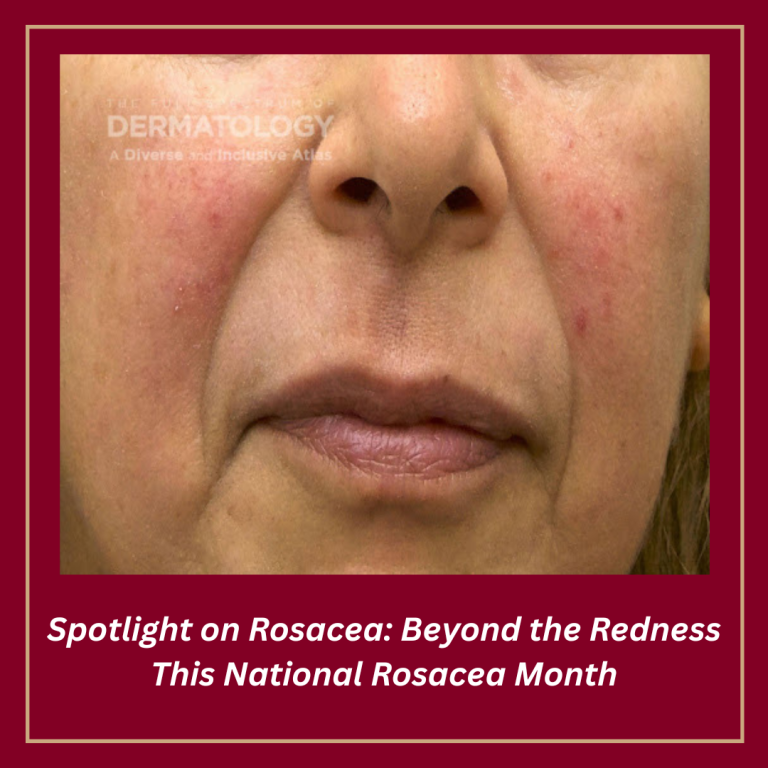
Spotlight on Rosacea: Beyond the Redness This National Rosacea Month
April is National Rosacea Month – a timely reminder for dermatology clinicians to widen their diagnostic lens beyond the classic picture of facial redness. While persistent central facial erythema is the well-known hallmark, rosacea frequently presents with subtler, more variable features that deserve careful attention.
As highlighted in the Full Spectrum of Dermatology: A Diverse and Inclusive Atlas, patients may show erythematous, violaceous, or hyperpigmented patches with telangiectasias across the cheeks and glabella. In darker skin tones, however, rosacea can appear differently acneiform papules and less obvious phymatous change, such as markedly dilated follicular ostia, may be more prominent than diffuse redness. Recognizing these presentations supports earlier, more accurate diagnosis and prevents unnecessary treatment delays.
Flushing, one of the earliest signs of rosacea, is often overlooked in darker skin toned patients because transient erythema is less visible. Many patients instead report a consistent sensation of facial warmth – a subjective but important diagnostic clue that should not be discounted.
Guideline-based criteria emphasize persistent erythema as central to diagnosis, but real-world practice requires flexibility. By broadening our diagnostic approach and valuing patient-reported symptoms, we can ensure rosacea is recognized and treated appropriately across all skin tones.
Let National Rosacea Month be a call to catch up on JDD’s rosacea articles. Start here:
Exploring the Potential Link Between Minoxidil Use and Rosacea Using A Real-World Data Base