
Red Light Therapy in Modern Aesthetics: Bridging Evidence and Commercial Claims
Are you up to date on the latest research from the JDD regarding photobiomodulation?
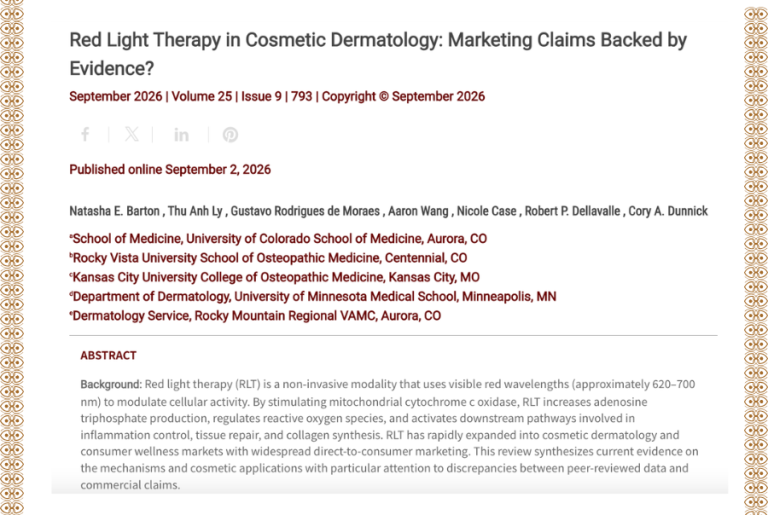
As direct-to-consumer wellness devices continue to flood the cosmetic market, patients are increasingly seeking guidance on the real clinical efficacy of low-level light therapy. A newly published review in the Journal of Drugs in Dermatology offers a timely, rigorous analysis of red light therapy (RLT) in cosmetic dermatology, evaluating its biological mechanisms alongside the validity of popular commercial claims.
Red light therapy utilizes visible red wavelengths (620 to 700 nm) to target mitochondrial cytochrome c oxidase, boosting adenosine triphosphate production, modulating reactive oxygen species, and activating cellular pathways linked to tissue repair and collagen synthesis. To evaluate real-world application, researchers conducted a comprehensive literature review focusing on the six most frequently targeted aesthetic conditions, comparing peer-reviewed clinical trial outcomes directly against the marketing narratives of leading consumer devices.
The findings confirm that photobiomodulation serves as a safe, low-risk, and biologically sound adjunct for specific indications, such as acne management, androgenetic alopecia, mild photoaging, and post-procedure wound healing. However, the data highlights a clear divergence between clinical reality and marketing claims. While evidence demonstrates modest, gradual results dependent on consistent maintenance, commercial messaging frequently promises rapid, dramatic, and transformative outcomes.
Understanding these critical nuances allows dermatologists to establish realistic expectations and deliver evidence-based counsel when addressing patient inquiries about home-use light therapy devices. Head over to the Journal of Drugs in Dermatology to review the full analysis, indication-by-indication evidence breakdowns, and practical guidance for your practice.
Blog write-up assisted by AI