
Bacteriophages in Acne Care: A New JDD Study to Watch
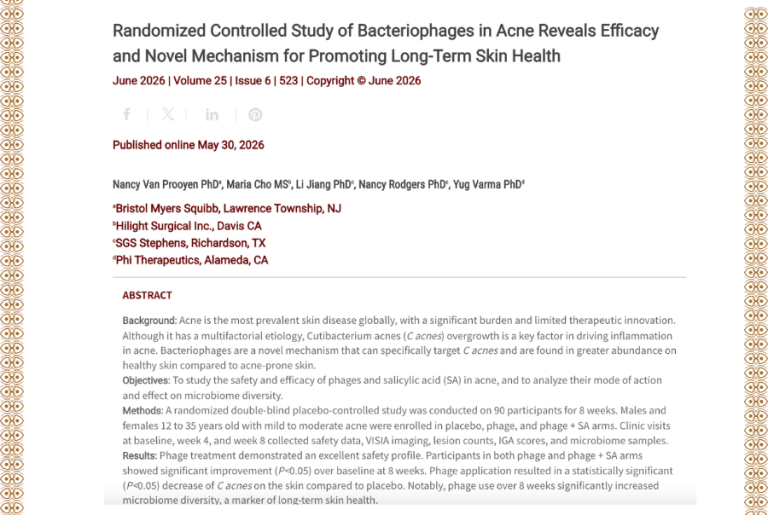
This is a must-read article from JDD for dermatology professionals following the search for new acne treatments. A randomized, double-blind, placebo-controlled study explored whether bacteriophages, with or without salicylic acid, could offer a new approach for mild to moderate acne.
The study enrolled 90 participants ages 12 to 35 and tracked safety, lesion counts, imaging, global acne scores, and microbiome samples over 8 weeks. The results point to a favorable safety profile and meaningful improvement in the treatment arms, with phage and phage plus salicylic acid both showing benefit compared with baseline.
What makes this acne study especially notable is its focus on Cutibacterium acnes and the skin microbiome. Researchers found that phage treatment significantly reduced C acnes on the skin compared with placebo. Even more interesting for clinicians watching the next wave of acne innovation, phage use was associated with increased microbiome diversity, which may signal broader skin health implications beyond short term lesion reduction.
For practicing dermatologists and dermatology healthcare professionals, this JDD article adds to the growing conversation around microbiome-aware acne therapy and targeted strategies that go beyond traditional approaches. While more research will be needed before any firm clinical conclusions can be drawn, the data may be of interest to anyone tracking emerging options in acne management.
If you want to stay ahead of where acne treatment research is heading, this one is worth opening and reading in full.
Blog write-up assisted by AI