
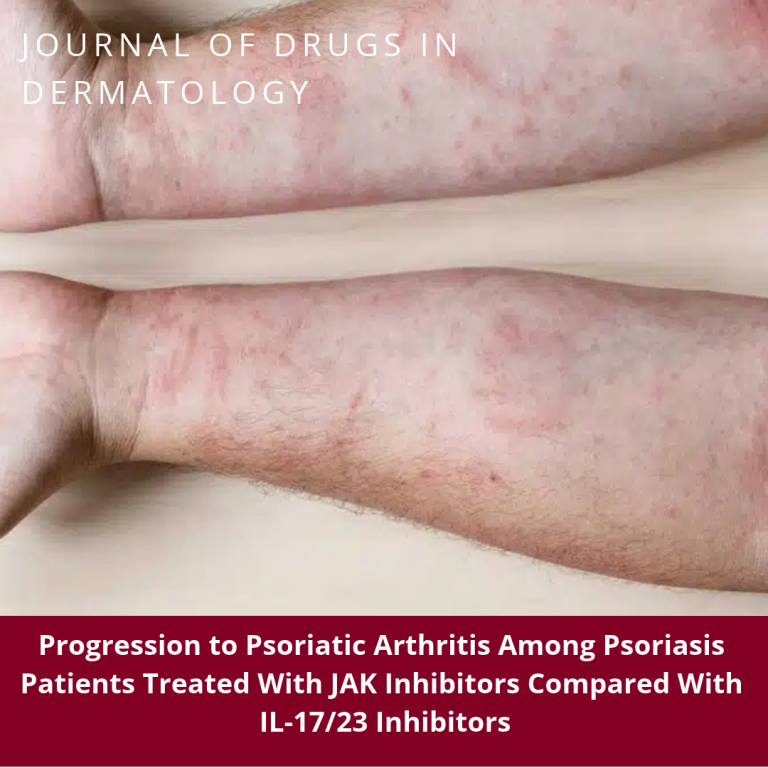
Comparing Targeted Systemic Therapies and Incident Psoriatic Arthritis Risk in Psoriasis Patients
Have you read this article from the JDD? For dermatology providers managing complex psoriasis cases, predicting and mitigating the risk of progression to psoriatic arthritis remains a primary clinical objective. While advanced therapeutic options such as interleukin inhibitors and Janus kinase inhibitors have transformed disease management, their comparative associations with preventing or delaying incident psoriatic arthritis have not been fully elucidated until now.
A recent large scale observational study utilizing a TARGET trial emulation framework evaluated adults with psoriasis who initiated treatment with JAK inhibitors compared to those starting IL-17 or IL-23 inhibitors. By excluding patients with preexisting psoriatic arthritis and employing rigorous propensity score matching across clinical demographics, comorbidities, prior medication exposures, and baseline musculoskeletal symptoms, researchers were able to assess long term incident outcomes over a five year period.
The findings reveal striking variations in outcomes across different therapeutic classes. IL-23 inhibitors were associated with a significantly lower cumulative incidence of psoriatic arthritis compared to JAK inhibitors. Conversely, patients initiating IL-17 inhibitors demonstrated a higher observed incidence than those treated with JAK inhibitors. These comparative distinctions provide valuable real world evidence that can help refine treatment selection and long term disease management strategies.
Understanding these therapeutic nuances is crucial when choosing the initial systemic regimen for high risk psoriasis patients. Explore the full study in the latest issue of the Journal of Drugs in Dermatology to review the complete statistical hazard ratios, Kaplan-Meier time to event curves, and detailed cohort methodologies.
Blog write-up assisted by AI