Featured Article
Oral tetracyclines are the most widely prescribed systemic antibiotic for acne. Synthesis of efficacy and safety of traditional and novel oral tetracyclines is highly informative to clinical practice. The authors conducted a systematic search of PubMed to identify large interventional and observational studies utilizing oral tetracyclines as an acne treatment.
Oral tetracyclines are the most widely prescribed systemic antibiotic for acne. Synthesis of efficacy and safety of traditional and novel oral tetracyclines is highly informative to clinical practice. The authors conducted a systematic search of PubMed to identify large interventional and observational studies utilizing oral tetracyclines as an acne treatment.
Acne vulgaris is a common skin disease affecting up to 70% of the population during their lifetime. Cutibacterium acnes is the primary target of acne pathogenesis, and oral antibiotics, namely oral tetracyclines, have been the mainstay of systemic acne treatment for decades. In addition, oral tetracyclines possess an indirect anti-inflammatory effect against acne. Oral tetracyclines are an important part of the acne treatment regimen, and substantial evidence exists for their efficacy and safety for use in inflammatory acne.
Oral tetracyclines demonstrate bacteriostatic (inhibiting bacterial growth) effects against C. acnes; however, some tetracyclines also exhibit bacteriostatic effects on beneficial commensal organisms of the gut. This broad-spectrum effect can lead to a less diverse gut microbiome. Disruptions in the symbiotic relationship between the gut microbiome and the host have been associated with chronic diseases, such as obesity and inflammatory bowel disease (IBD). Although a compositional definition of an ideal gut microbiome does not exist, greater microbial diversity is important for protection from pathogens, nutrient supply, and vitamin production.
While oral tetracyclines are widely prescribed for acne, a gap exists in synthesizing the most recent data on the efficacy and safety of these agents. We conducted a systematic review of the efficacy and safety of common oral tetracyclines (sarecycline, doxycycline, minocycline, and tetracycline) used for acne.
To determine the efficacy and safety of oral tetracyclines for acne, we followed the Preferred Reporting Items for Systematic Reviews guidelines and performed a systematic review using PubMed and Embase. Our search included published articles from January 1960 to April 2020, and our search criteria included the following: (“Acne”[MeSH] OR “Acne Vulgaris”[MeSH]) OR “acne vulgaris/drug therapy”[MeSH Major Topic]) AND tetracyclines [MeSH Terms].
Among their many additional suggestions, the authors offer insight into financial considerations, office medical record policies and procedures, how much to stock of various emergency supplies and more.
“We are hopeful that this provides at least a template of items for consideration and implementation across the various practice situations and emergencies and mitigates the reoccurrence of difficult lessons learned from the COVID-19 pandemic,” they write.
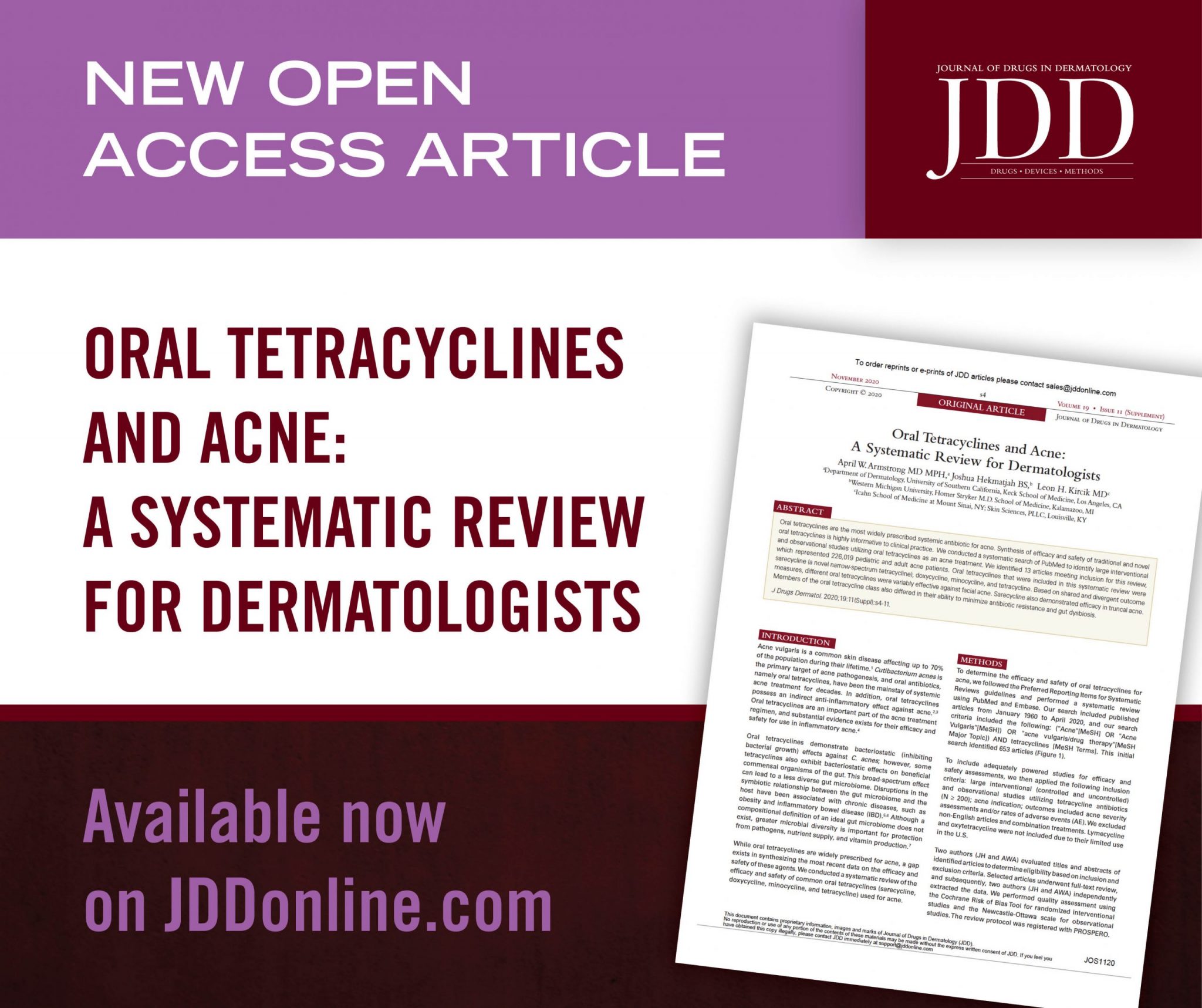
Oral Tetracyclines and Acne: A Systematic Review for Dermatologists
Oral tetracyclines are the most widely prescribed systemic antibiotic for acne. Synthesis of efficacy and safety of traditional and novel oral tetracyclines is highly informative to clinical practice. We conducted a systematic search of PubMed to identify large interventional and observational studies utilizing oral tetracyclines as an acne treatment. We identified 13 articles meeting inclusion for this review, which represented 226,019 pediatric and adult acne patients. Oral tetracyclines that were included in this systematic review were sarecycline (a novel narrow-spectrum tetracycline), doxycycline, minocycline, and tetracycline. Based on shared and divergent outcome measures, different oral tetracyclines were variably effective against facial acne. Sarecycline also demonstrated efficacy in truncal acne. Members of the oral tetracycline class also differed in their ability to minimize antibiotic resistance and gut dysbiosis.
Read More
Get More from the JDD
Get the latest dermatology news delivered straight to your Inbox – sign up for the JDD Newsletter.
Discover the latest research, exclusive articles from leading dermatology experts, popular Podcast episodes, free CME activities, and more!


You May Also Like