
Bridging Function and Aesthetics in Facial Paralysis Management
This is a must-read article from JDD that explores a transformative approach to neuromodulators in specialized patient care.
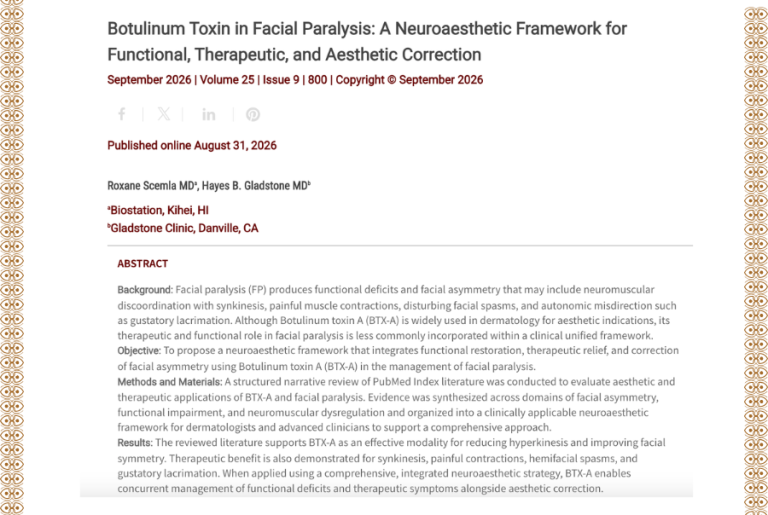
Facial paralysis presents complex clinical challenges, ranging from functional deficits and facial asymmetry to neuromuscular discoordination, painful muscle contractions, and gustatory lacrimation. While Botulinum toxin A is widely recognized in aesthetic dermatology, its expanded therapeutic role within facial paralysis care often lacks a single, unified clinical model.
A new publication in the Journal of Drugs in Dermatology presents a structured narrative review evaluating the broad spectrum of aesthetic and therapeutic applications for Botulinum toxin A. Synthesizing literature across facial asymmetry, functional impairment, and neuromuscular dysregulation, the authors establish a neuroaesthetic framework designed to guide dermatologists and advanced clinicians in delivering comprehensive care.
The findings highlight how targeted neuromodulator therapy effectively reduces hyperkinesis, balances facial symmetry, and manages distressing sequelae such as synkinesis, hemifacial spasms, and painful contractions. By unifying functional restoration with aesthetic refinement, this framework allows experienced injectors to address multi-systemic facial nerve dysfunction within a single strategy.
Because dermatologists possess deep expertise with neuromodulators, adopting this integrated neuroaesthetic perspective offers an exciting avenue to optimize outcomes for patients navigating the effects of facial paralysis. Explore the full study in the Journal of Drugs in Dermatology to review the complete literature synthesis, dosing considerations, and clinical insights.
Blog write-up assisted by AI