
INTRODUCTION
The number of aesthetic procedures performed among African-American (AA) patients in the United States increased 43% between 2012 and 2019.1,2 Although there has been a recent focus on understanding the motivations for aesthetic procedures among AA patients,3,4 data specifically addressing the concerns of AA women remain limited. To better characterize the factors that prompt AA women to seek dermatologic consultation and pursue aesthetic procedures, we conducted a survey through a dermatology practice with a substantial AA patient population.
MATERIALS AND METHODS
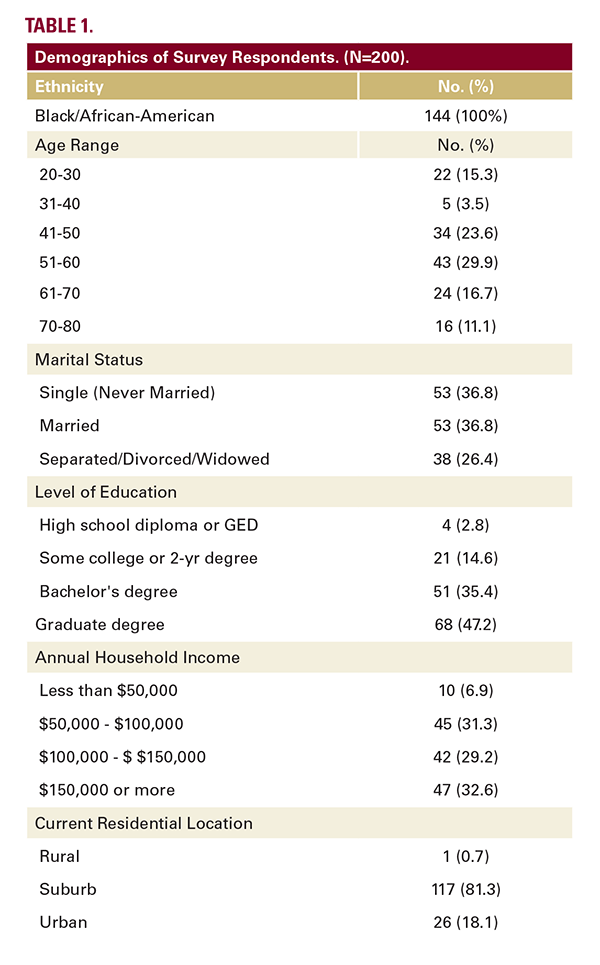
The IRB-approved, single-center survey included women of color, 20 to 80 years of age (Table 1), who were able to read and understand English and resided in Maryland and Washington, DC. Data were collected between September 13, 2021, and January 8, 2022, using a questionnaire administered via QuestionPro. Survey domains included demographics, beauty and skincare concerns, sunscreen usage, perceptions of skin aging, history of aesthetic procedures, and definitions of "natural" aesthetic results. Data analysis was performed using Microsoft Excel to assess frequency distributions, central tendencies, and variability.
RESULTS
A total of 144 AA women completed the survey, with 53.5% between the ages of 41 and 60 years old. Among respondents, 65.3% reported a history of dermatologic or cosmetic procedures, while 24.0% of those who had not previously undergone a procedure indicated willingness to pursue one. Primary motivations for seeking aesthetic procedures included reducing signs of aging (62.5%), maintaining appearance as part of their lifestyle (50.0%), and enhancing self-confidence (43.8%). External influences, such as suggestions from others (14.6%) or social media/influencers (2.8%), were reported less frequently. Regarding the responders' current facial and cosmetic concerns, the most frequently selected was hair loss (54.2%), followed by dark spots (51.4%), unwanted facial hair (49.3%), dark circles under the eyes (45.1%), and blotchy or uneven skin tone/color (43.8%) (Figure 1).
Notably, 59.0% of respondents reported current use of an anti-aging product in their skin care routine (Figure 2), and 50% of respondents believed that anti-aging products should be included in a regimen prior to the age of thirty. Most of the women (61.8%) were using or planning to use skincare products to maintain or boost a cosmetic procedure. Sunscreen use