
INTRODUCTION
Lichen planus pigmentosus (LPP) is an acquired dermal melanosis that typically affects photo-exposed and flexural surfaces. Q-switched neodymium: yttrium aluminum garnet (QS Nd:YAG) lasers target dermal melanosis and have shown promise in the treatment of LPP. The majority of reported cases using QS Nd:YAG are confined to the face,1 despite at least 64% of cases of LPP presenting on extrafacial skin. Here, we describe 3 cases of LPP with facial and extrafacial involvement treated with QS Nd:YAG laser, highlighting both therapeutic response and treatment-related complications.
CASE SERIES
Three cases of biopsy-proven extrafacial LPP treated with QS Nd:YAG were included. In all cases, histopathology demonstrated lichenoid interface dermatitis with pigment incontinence, consistent with LPP.
Case 1: A 69-year-old male with Fitzpatrick type IV skin presented with LPP on the face, bilateral shoulders, chest, and lower back, refractory to topical corticosteroids. He underwent 16 treatments of QS Nd:YAG (spot size: 6 mm, fluence: 2.1-3.7 J, and frequency: 10 Hz; 1-2 passes for the face, 2-3 passes for the shoulders and chest, and 3-5 passes for the back) 1-4 weeks apart with moderate improvement of all sites.
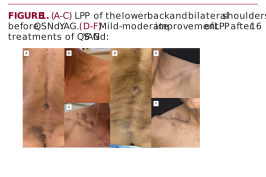
Additional maintenance treatments are currently being pursued.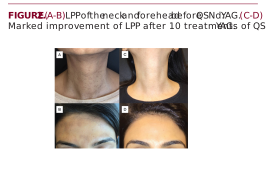
Case 2: A 44-year-old female with Fitzpatrick type IV skin presented with LPP on the face and neck. Her LPP was refractory to topical corticosteroids, hydroquinone cream, prednisone (tapered from 60 mg daily to 5 mg daily over 4 months) and low-dose isotretinoin (20 mg daily for 9 months). She underwent 10 treatments of QS Nd:YAG (spot size: 4-6 mm, fluence: 2.0-2.7 J, frequency: 10 Hz; 1-3 passes) 4 weeks apart. Within 3 treatments, improvement was noted. To enhance the results, the patient was started oral tranexamic acid 325 mg BID. Marked improvement was seen on the face and neck.