INTRODUCTION
Tirzepatide is a dual glucagon-like pedtide-1 (GLP-1) and glucose-dependent insulinotropic peptide (GIP) agonist and is primarily used to improve glycemic control along with weight reduction. It has also demonstrated anti-inflammatory effects via downregulating proinflammatory cytokines, including C-reactive protein (CRP) and interleukin-6 (IL-6).1 Rosacea is chronic inflammatory disorder marked by recurrent flushing, erythema, telangiectasias, papules and pustules over the face resulting from the overexpression of Th1/Th17, toll-like receptor-2 (TLR-2), transient receptor protentional vanilloid-1 and ankyrin-1.2 Demodex mite infestation on the skin is another trigger for the development of rosacea likely due to an immune reaction between the mites and the immune system resulting in chronic inflammation;however the full mechanism of action is not completely understood.3 It has also been associated with other medical conditions, including cardiovascular disease, anxiety, diabetes mellitus, migraine, rheumatoid arthritis, and ulcerative colitis.4 Disease control is usually achieved via a multipronged approach; however, GLP-1 receptor agonists may be a novel therapeutic option in this cohort of patients due to their anti-inflammatory effects.
We present a case of papulopustular rosacea that resulted in significant improvement following the initiation of tirzepatide, highlighting its potential as an adjunctive therapeutic option in obesity and metabolic dysfunction to achieve and maintain disease control.
We present a case of papulopustular rosacea that resulted in significant improvement following the initiation of tirzepatide, highlighting its potential as an adjunctive therapeutic option in obesity and metabolic dysfunction to achieve and maintain disease control.
CASE PRESENTATION
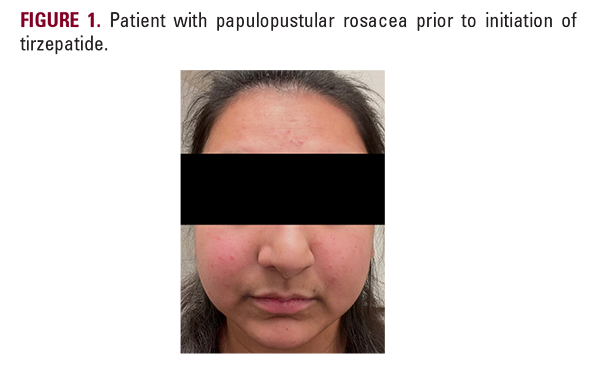
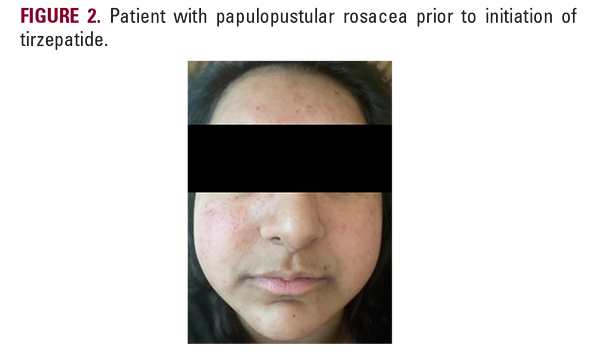
A 36-year-old woman presented with a past medical history of type 2 diabetes, obesity, asthma, premature ovarian failure, metabolic dysfunction associated with steatotic liver disease, hyperlipidemia, and papulopustular rosacea treated with twice daily sodium sulfacetamide 9% and sulfur 4% wash and 0.75% topical metronidazole cream with minimal improvement over the course of a year (Figures 1 and 2). She was then found to have uncontrolled diabetes with a hemoglobin A1c (HbA1c) of 11.6% and was started on tirzepatide injections weekly for diabetic control and weight loss. One month after initiating treatment with tirzepatide, the patient's rosacea markedly improved (Figure 3), and the patient was able to cut down on her treatment regimen to twice weekly.