INTRODUCTION
Psoriasis is a chronic inflammatory skin disorder known to be linked to type 2 diabetes mellitus (T2DM), with 11.6% of psoriasis patients having comorbid T2DM.1 Glucagon-like peptide-1 receptor agonists (GLP-1 RA) effectively treat T2DM, and recent studies demonstrate their potential role in modulating systemic inflammation for psoriasis treatment.2 However, large-scale, real-world data comparing the effects of GLP-1 RAs with other antihyperglycemic medications on psoriasis disease severity and treatment escalation among patients with comorbid T2DM remains limited.
MATERIALS AND METHODS
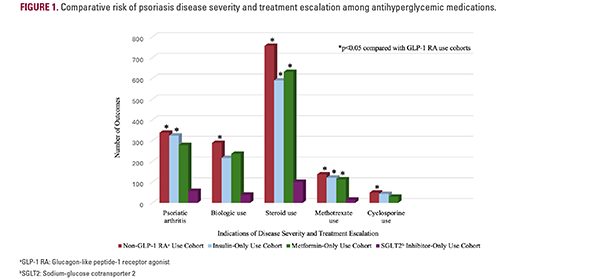
Using the TriNetX Research Network, adults (greater than or equal to 18) with psoriasis and T2DM were identified using ICD-10-CM codes L40 and E11, respectively. A retrospective cohort analysis was initially conducted to ascertain whether any significant signal existed in psoriasis disease severity outcomes between patients treated with GLP-1 RAs and those treated with all non-GLP-1 RA antihyperglycemic therapies. This primary analysis was designed to reflect routine clinical practice, in which patients frequently receive multiple or sequential classes of diabetic medications. The composite 'all non-GLP-1 RA' group included insulin, metformin, dipeptidyl peptidase-4 inhibitors, sodium-glucose cotransporter 2 (SGLT2) inhibitors, sulfonylureas, meglitinides, thiazolidinediones, and alpha-glucosidase inhibitors. To further characterize and validate our findings from the primary analysis, additional subgroup comparisons were conducted across three distinct matched cohort analyses: (1) GLP-1 RAs versus insulin monotherapy, (2) GLP-1 RAs versus metformin monotherapy, and (3) GLP-1 RAs versus SGLT2 inhibitor monotherapy. For each experiment, individual 1:1 propensity score-matching was performed on age, sex, race, ethnicity, BMI, smoking, alcohol use, chronic kidney disease,