To the Editor,
Atopic Dermatitis (AD) is known for a wide range of comorbid conditions. For example, studies have shown that AD is associated with atopic comorbidities such as asthma, rhinitis, and food allergy, as well as nonatopic comorbidities such as ocular, psychiatric, infectious, endocrine, autoimmune, and cardiovascular diseases.1 Treatment patterns can help alleviate these comorbidities. Consistent evidence has revealed that socioeconomic, environmental, and health care factors influence AD prevalence and severity; these same contributing risk factors are more frequently experienced among racial and ethnic minority populations as a result of racial disparities.2 As a result, we sought to assess whether there were racial differences in comorbidities and treatment patterns in patients with AD using a large representative cohort.
We accessed de-identified electronic health records from the TriNetX Research Network on May 2, 2025. This database comprises approximately 144 million patients from 102 participating healthcare organizations. Patients who were between 18 and 89 years old at the time of AD diagnosis (ICD- 10: L20) were identified, yielding cohorts of 283,293 White and 81,534 Black or African American individuals.
Propensity score matching (1:1) was performed based on demographic and clinical covariates, including age at diagnosis, sex, ophthalmic disorders, psychiatric conditions, autoimmune diseases, cardiovascular conditions, infections, bone density disorders, and malignancies. These variables were selected based on previously reported atopic and nonatopic comorbidities associated with AD. After matching, both cohorts included 76,654 patients, with all covariates demonstrating standardized mean differences less than 0.1, indicating successful balancing.
We assessed differences in prescription patterns and healthcare utilization within one year of AD diagnosis using odds ratios (OR) with 95% confidence intervals. Among comorbidities, most racial disparities were clinically insignificant. However, we observed significantly increased odds of inflammatory bowel disease (IBD) among Black AD patients compared to White AD patients. Specifically, Black atopic patients had increased odds of ulcerative colitis compared to White atopic patients (318 vs 407, OR 1.28, P<0.0001) and Crohn’s disease (380 vs 499, OR 1.31, P<0.0001.
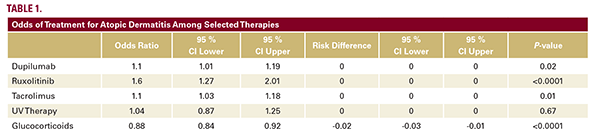
Previous studies have demonstrated that individuals with AD have about a twofold increase in odds of having inflammatory bowel disease.3 However, our findings reveal a racial difference within this AD-associated comorbidity. Studies have analyzed triggers for AD and IBD, including triggers such as air pollution.4 Our findings likely reflect environmental risk factors that disproportionately affect low socioeconomic groups.5 Additionally, we found that among treatment patterns, mean times to follow up were similar between cohorts (309 vs 308 days), while white patients were more likely to be treated with ruxlotinib (Table 1).
Atopic Dermatitis (AD) is known for a wide range of comorbid conditions. For example, studies have shown that AD is associated with atopic comorbidities such as asthma, rhinitis, and food allergy, as well as nonatopic comorbidities such as ocular, psychiatric, infectious, endocrine, autoimmune, and cardiovascular diseases.1 Treatment patterns can help alleviate these comorbidities. Consistent evidence has revealed that socioeconomic, environmental, and health care factors influence AD prevalence and severity; these same contributing risk factors are more frequently experienced among racial and ethnic minority populations as a result of racial disparities.2 As a result, we sought to assess whether there were racial differences in comorbidities and treatment patterns in patients with AD using a large representative cohort.
We accessed de-identified electronic health records from the TriNetX Research Network on May 2, 2025. This database comprises approximately 144 million patients from 102 participating healthcare organizations. Patients who were between 18 and 89 years old at the time of AD diagnosis (ICD- 10: L20) were identified, yielding cohorts of 283,293 White and 81,534 Black or African American individuals.
Propensity score matching (1:1) was performed based on demographic and clinical covariates, including age at diagnosis, sex, ophthalmic disorders, psychiatric conditions, autoimmune diseases, cardiovascular conditions, infections, bone density disorders, and malignancies. These variables were selected based on previously reported atopic and nonatopic comorbidities associated with AD. After matching, both cohorts included 76,654 patients, with all covariates demonstrating standardized mean differences less than 0.1, indicating successful balancing.
We assessed differences in prescription patterns and healthcare utilization within one year of AD diagnosis using odds ratios (OR) with 95% confidence intervals. Among comorbidities, most racial disparities were clinically insignificant. However, we observed significantly increased odds of inflammatory bowel disease (IBD) among Black AD patients compared to White AD patients. Specifically, Black atopic patients had increased odds of ulcerative colitis compared to White atopic patients (318 vs 407, OR 1.28, P<0.0001) and Crohn’s disease (380 vs 499, OR 1.31, P<0.0001.
Previous studies have demonstrated that individuals with AD have about a twofold increase in odds of having inflammatory bowel disease.3 However, our findings reveal a racial difference within this AD-associated comorbidity. Studies have analyzed triggers for AD and IBD, including triggers such as air pollution.4 Our findings likely reflect environmental risk factors that disproportionately affect low socioeconomic groups.5 Additionally, we found that among treatment patterns, mean times to follow up were similar between cohorts (309 vs 308 days), while white patients were more likely to be treated with ruxlotinib (Table 1).