INTRODUCTION
Atopic dermatitis (AD) is a chronic inflammatory skin condition characterized by intense pruritus and recurrent flares.1 Despite advances in biologic therapies targeting key cytokines involved in AD, treatment challenges remain for patients with refractory disease. Nemolizumab, an interleukin-31 (IL-31) inhibitor, has shown promise in reducing pruritus in AD by targeting a cytokine central to the itch-scratch cycle.2 However, the broader inflammatory consequences of IL-31 inhibition, particularly in patients with active AD, are still being evaluated.
Case Report
A 49-year-old male with a longstanding history of AD presented with a significant flare following the initiation of nemolizumab, an IL-31 inhibitor, which at the time was an off-label treatment of AD. The patient had previously responded to dupilumab, though the efficacy diminished over time. Subsequent treatments with tralokinumab, upadacitinib, abrocitinib, cyclosporine, and methotrexate were ineffective in managing his symptoms.
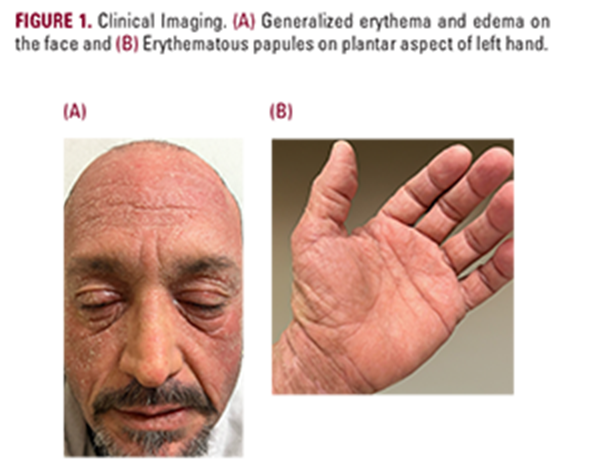
One day after his first injection of nemolizumab, the patient experienced a severe flare of AD necessitating admission to the dermatology inpatient service for further management. On presentation, he had widespread erythema and edema affecting the eyelids, face, and entire body, along with numerous small vesicles on the bilateral hands and feet, consistent with dyshidrotic eczema - a new clinical manifestation for him (Figure 1A and Figure 1B). He reported worsening pruritus,
Case Report
A 49-year-old male with a longstanding history of AD presented with a significant flare following the initiation of nemolizumab, an IL-31 inhibitor, which at the time was an off-label treatment of AD. The patient had previously responded to dupilumab, though the efficacy diminished over time. Subsequent treatments with tralokinumab, upadacitinib, abrocitinib, cyclosporine, and methotrexate were ineffective in managing his symptoms.
One day after his first injection of nemolizumab, the patient experienced a severe flare of AD necessitating admission to the dermatology inpatient service for further management. On presentation, he had widespread erythema and edema affecting the eyelids, face, and entire body, along with numerous small vesicles on the bilateral hands and feet, consistent with dyshidrotic eczema - a new clinical manifestation for him (Figure 1A and Figure 1B). He reported worsening pruritus,