
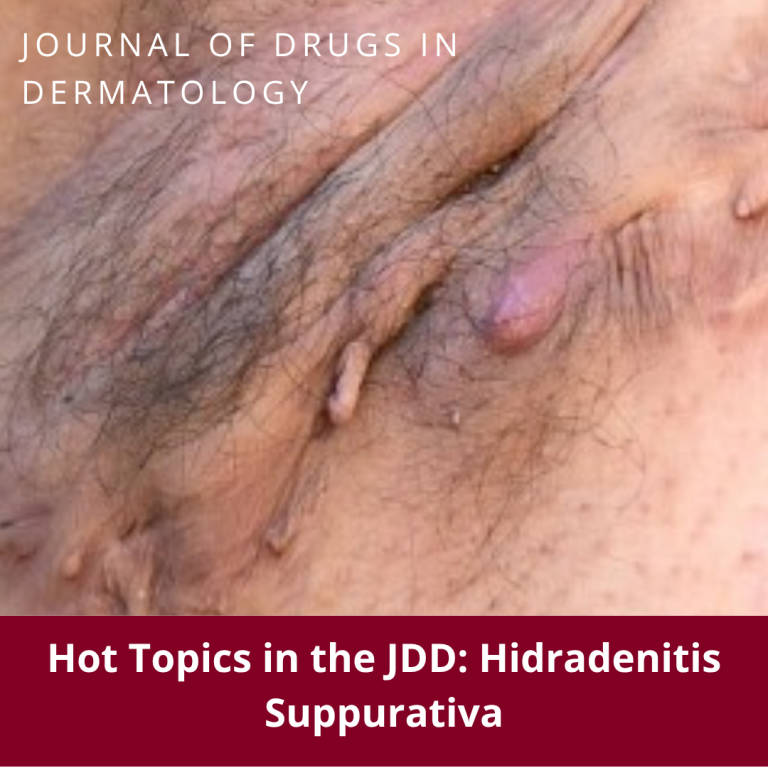
Hidradenitis suppurativa (HS) treatment has drastically changed in the last 15 years with FDA-approved biologics and an understanding of the need for comprehensive care that addresses the multifactorial pathogenesis of this condition. From biologics and topicals to in-office procedures and lifestyle modifications, caring for patients with HS involves a multimodal approach. Knowing which treatment options provide the highest level of safety and efficacy requires being up to date on the latest research. The following are some of the latest JDD studies on HS, including therapies, systemic impacts, and paradoxical presentations:
GLP-1 Receptor Agonists in Overweight and Obese Patients With Hidradenitis Suppurativa
A retrospective study of overweight adult HS patients with at least one weight-related comorbidity and obese adult HS patients analyzed the impact of GLP-1 receptor agonist (GLP-1 RA) use on their HS. The study looked at 5 years of electronic medical records at the University of Pennsylvania. Nearly 60% of patients experienced improvement in their HS while on GLP-1 RAs, while 30% experienced no changes in their HS severity and nearly 10% experienced worsening symptoms. The authors believe GLP-1 RAs may be associated with HS improvement and request future studies to determine whether improvements are related to weight reduction or inflammatory changes.
Perspectives and Practice Patterns of Dermatologists Using Laser Hair Removal for Hidradenitis Suppurativa
This survey of board-certified dermatologists who treat HS found 88% perform laser hair removal for HS, though most respondents (51%) only utilize the procedure in 1-5 HS patients per month. Respondents noted insurance coverage and cost were barriers to treatment, though two-thirds (67%) of respondents reported usually observing improvements in HS severity after laser hair removal treatment. The authors recommend efforts to improve insurance coverage to expand patient access.
Biologics for Pediatric Hidradenitis Suppurativa: An Update on the Evolving Therapeutic Landscape
This review of FDA-approved and off-label therapies for pediatric HS provides evidence-backed data on a patient population that’s underrepresented in HS research. Adalimumab and secukinumab are currently the only FDA-approved biologics for the treatment of moderate-to-severe HS in children. The review details a case report of bimekizumab — currently only approved for adults with moderate-to-severe HS — in the successful treatment of HS in a 15-year-old male. Other treatments addressed in the review include the off-label use of infliximab as well as sonelokimab, which is in clinical trials for both adult and pediatric HS.
Hidradenitis Suppurativa in Psoriasis Patients Treated With Biologics
Paradoxical HS can occur as a result of biologic treatment for psoriasis. A retrospective cohort study of data from the TriNetX database found psoriasis patients on adalimumab or infliximab had a significantly greater likelihood of a resulting HS diagnosis compared with controls. Meanwhile, psoriasis patients on risankizumab or guselkumab had a significantly lower risk of paradoxical HS. The authors suspect this disparity is due to mechanism of action differences, helping inform the understanding of the pathogenesis of HS. In cases where patients experience paradoxical HS as a result of biologic therapy, the authors recommend clinicians consider risankizumab or guselkumab as alternate therapies.
Impact of TNF-α and IL-17 Biologics on Cardiometabolic Outcomes in Hidradenitis Suppurativa: Retrospective Cohort Study
This study, which also used data from the TriNetX database, examined the impact of biologic therapy on cardiac and metabolic conditions in patients with HS. Overall, patients on biologics had a significantly lower risk of developing type 2 diabetes, heart attack, stroke, and heart failure compared with HS patients not on a biologic. Specifically, HS patients who were treated with IL-17 inhibitors had a significantly lower risk of developing type 2 diabetes, heart attack, and heart failure compared with HS patients on TNF-α inhibitors. Emergency department visits and hospitalizations were also reduced in HS patients on IL-17 inhibitors. The authors write that clinicians should consider a patient’s cardiometabolic health when selecting a biologic therapy.