
In 1999, the Institute of Medicine’s (IOM) first report, “To Err Is Human”, brought forth the issue of medical error in patient care.1 In this publication, the IOM recognized that mistakes or failures to prevent mistakes were mostly caused by flawed systems, processes, and conditions. It outlined a four-tiered approach to improve safety including: 1) development of leadership, research, tools, and protocols to enhance the knowledge base on safety, 2) a nationwide public mandatory reporting system and encouraging voluntary participation to identify and learn from errors, 3) oversight organizations, professional groups, health care purchasers to raise performance standards and expectations, and 4) implementation of safety systems in the healthcare organization to ensure delivery of safe practice. This was the first roadmap towards a safer health system.
The Joint Commission adopted a formal Sentinel Event Policy to assist office-based surgery practices to improve safety and learn from serious adverse events when they occur. To reduce errors, the Joint Commission implemented the use of Universal Protocol to prevent wrong-site, wrong-person, or wrong-procedure surgery.2 In dermatology, the addition of preoperative biopsy-site photography has been helpful in site identification. In a survey study of 722 Mohs surgeons, 89% reported photographs as the most useful tool to decrease risk of wrong-site surgery.3
Surgical specialties have incorporated Universal Protocol, consisting of a verification process, surgical site marking, and time out immediately prior to procedure. The time out is designed to ensure correct patient identity, correct scheduled procedure, and correct surgical site. The pre-procedure verification process and surgical site marking include the patient, nursing staff, and Mohs surgeon by confirming patient’s name and date of birth, reviewing pathology report and photographs if available, and involving the patient in site identification. We believe a time out process during interpretation of Mohs histopathology sections would minimize mapping errors that could lead to persistence or recurrence of cancer, as well as over-resection of tissue.
Often times several patients’ slides are prepared simultaneously to maximize efficiency. As a result, several sets of slides are completed at the same time for the surgeon to read. The combination of multiple patients with possibly more than one slide each further compounds the risk for error. The time out procedure should involve at least two people: Mohs surgeon, fellow, resident, histology technician, or nurse. The verbal confirmation should include patient’s name, diagnosis, stage, and section number (Table 1). The time out process should occur prior to slide being placed on the microscope and agreed upon by Mohs surgeon and second participant. The procedure must be performed before reading each slide in order to facilitate accurate map marking.
You May Also Like
 Forefront Dermatology partners with MedscapeLive! to present a new CME Webinar Series, DermEdge
Forefront Dermatology partners with MedscapeLive! to present a new CME Webinar Series, DermEdge
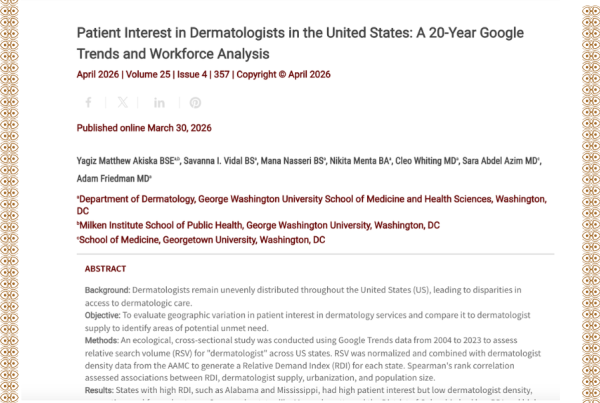 Patient Interest in Dermatologists in the United States: A 20-Year Google Trends and Workforce Analysis
Patient Interest in Dermatologists in the United States: A 20-Year Google Trends and Workforce Analysis
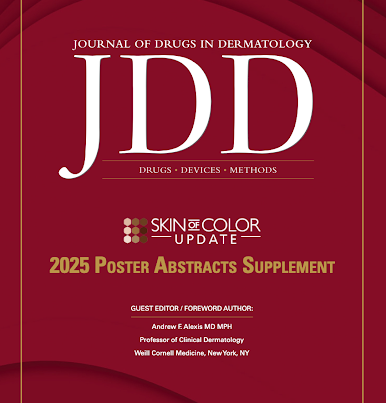 Announcing the SOCU 2025 Poster Abstract eSupplement