Navigating Scarring Eyebrow Alopecia: Diagnostic Insights and Evolving Therapeutics
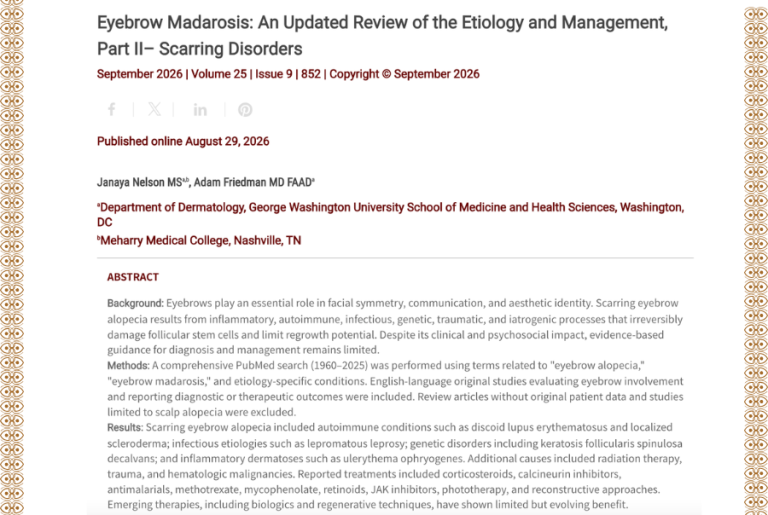
Have you read this recent article from the JDD? Eyebrows are a cornerstone of facial symmetry, emotional expression, and overall aesthetic identity. When scarring eyebrow alopecia strikes, the irreversible loss of follicular stem cells presents both a profound clinical challenge and a significant psychosocial burden for patients.
Because eyebrow madarosis stems from a wide spectrum of underlying causes, reaching an accurate diagnosis quickly is paramount. From autoimmune disorders like discoid lupus erythematosus to inflammatory dermatoses, infectious processes, genetic conditions, trauma, and iatrogenic damage, the differential diagnosis is vast. Each etiology requires a tailored approach to arrest follicular destruction before permanent loss occurs.
In a comprehensive review of clinical literature spanning over six decades, researchers synthesized patient data to map out current evidence-based approaches for managing scarring eyebrow loss. The investigation evaluates the diagnostic criteria and therapeutic outcomes of traditional interventions, including topical and systemic corticosteroids, calcineurin inhibitors, antimalarials, and immunosuppressive agents.
Furthermore, the study sheds light on the rising role of modern therapeutic modalities. Clinical interest continues to grow around advanced solutions such as JAK inhibitors, biologic targeted therapies, and surgical or regenerative reconstructive techniques. Because standard scalp protocols do not always translate directly to superciliary hair loss, this breakdown offers practicing dermatologists and clinical teams a targeted perspective on preserving patient outcomes.
Early intervention remains the key to halting non-reversible tissue damage. Discover the full spectrum of diagnostic markers, treatment algorithms, and emerging therapies by reviewing the complete study in the Journal of Drugs in Dermatology today.
Blog write-up assisted by AI