
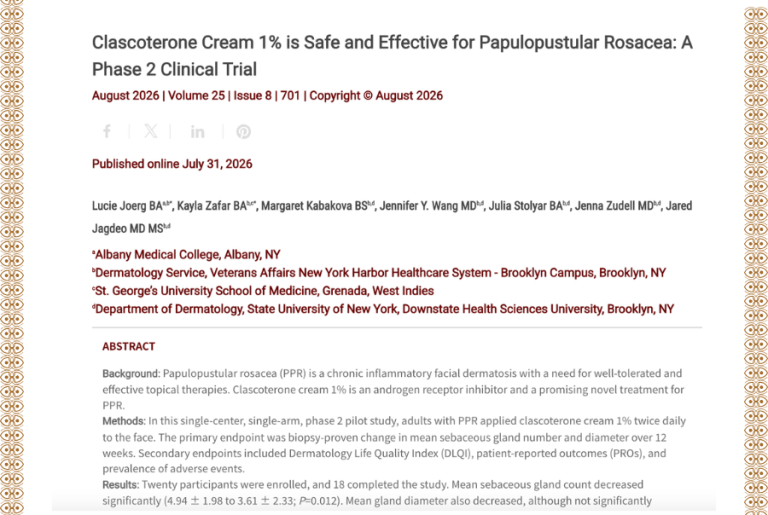
Investigating Clascoterone Cream 1% for Papulopustular Rosacea: Key Takeaways
This is a must-read article from JDD for clinicians seeking fresh therapeutic avenues for chronic facial dermatoses. Managing papulopustular rosacea often requires balancing rapid symptom reduction with long term cutaneous tolerability. A newly published phase 2 pilot study in the Journal of Drugs in Dermatology investigates the therapeutic potential of clascoterone cream 1%, an androgen receptor inhibitor, in addressing key histological and clinical markers of papulopustular rosacea.
While topical options for rosacea have historically targeted vascular reactivity or microbial burden, androgen receptor inhibition represents a distinct pathophysiological approach. Researchers evaluated adult participants applying clascoterone cream 1% twice daily over a 12 week period. The trial measured objective histological shifts, specifically evaluating changes in sebaceous gland density and diameter via facial skin biopsies, alongside standardized quality of life metrics and safety profiles.
The pilot trial yielded intriguing preliminary data regarding sebaceous gland modulation and patient-reported outcomes. Clinicians will note significant shifts in validated Dermatology Life Quality Index scores, as well as patient satisfaction markers related to papule reduction and facial redness. Furthermore, the overall safety profile showed encouraging local skin tolerability throughout the treatment duration.
Head over to the latest issue of the Journal of Drugs in Dermatology to read the complete study details, examine the histological findings, and evaluate how this novel topical pathway could fit into future rosacea treatment paradigms.
Blog write-up assisted by AI