
Why Mineral Sunscreen Whitening Matters More Than Ever in Dermatology
Have you read this article from the JDD? It highlights a practical issue dermatology professionals encounter often: mineral sunscreens may be favored by consumers, but their whitening effect can strongly influence both product choice and real-world use.
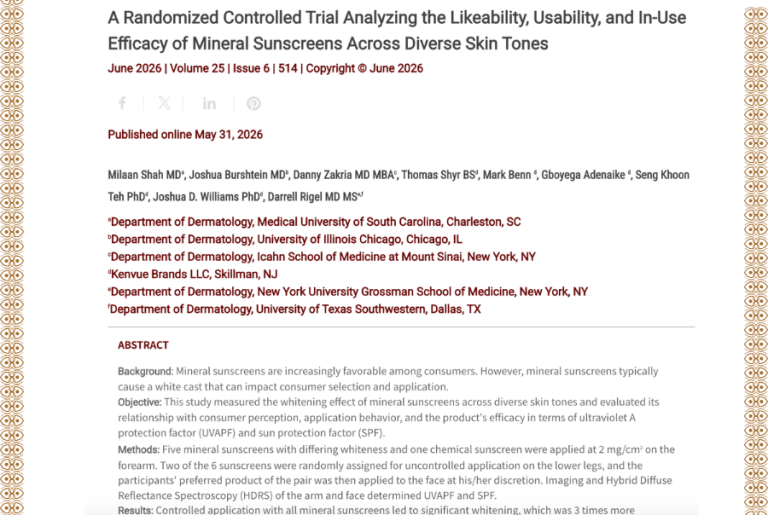
This study looked at how mineral sunscreen whitening varies across a range of skin tones and what that means for patient behavior, preference, and measured protection. Using five mineral sunscreens with different levels of whiteness, plus one chemical sunscreen, investigators assessed application on the forearm under controlled conditions and then observed less structured use on the lower legs and face. They also evaluated protection outcomes using imaging and Hybrid Diffuse Reflectance Spectroscopy, including SPF and UVAPF.
The findings are clinically relevant for practicing dermatologists and dermatology healthcare professionals. All of the mineral sunscreens produced visible whitening when applied in a controlled setting, and this effect was about three times more pronounced in darker skin tones. Just as importantly, when sunscreen use was left to participant discretion, less product was applied, whitening was reduced, and sunscreen efficacy dropped. Participants also showed a clear preference for products that left less visible residue.
For clinicians counseling patients on photoprotection, this study reinforces an important message: cosmetic acceptability can affect adherence, and adherence can affect protection. In patients with darker skin tones, the appearance of a sunscreen may be especially influential, which could lead to under-application and reduced effectiveness.
If you manage patients who struggle with sunscreen selection or compliance, this JDD article is worth a closer look. Read the full study to see how these findings may shape your sunscreen counseling, product recommendations, and daily practice.
Blog write-up assisted by AI