
Review highlights higher psychiatric comorbidity, systemic barriers to care, and the value of integrated psychodermatologic models
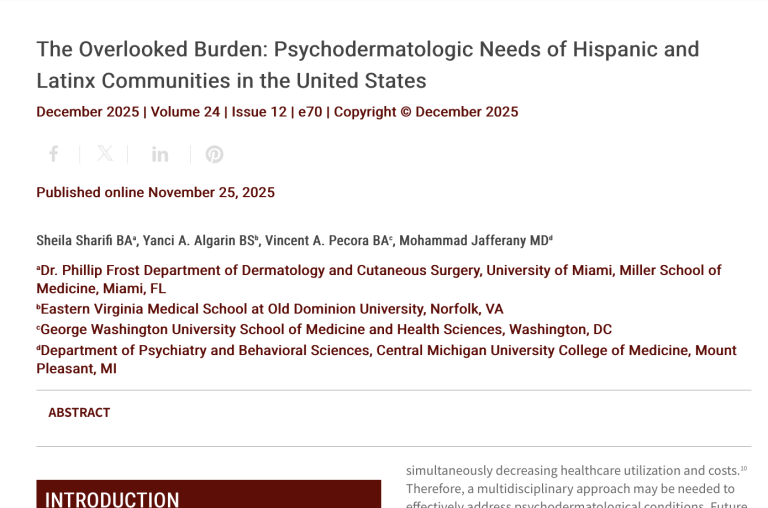
This article in the December 2025 issue of JDD discusses how Hispanic and Latinx patients in the U.S. carry a disproportionate psychological burden from dermatologic disease: population estimates put major depression in this group at roughly 8-15%, and cohort data show higher rates of psychiatric diagnoses in Hispanic patients with conditions such as chronic urticaria (15.2% vs 8.3% in non‑Hispanic Whites) and increased odds of depression in vitiligo. Social determinants (housing instability, lower socioeconomic status), language and cultural barriers, limited Spanish‑language tools and a dearth of Hispanic dermatologists contribute to underdiagnosis and under‑treatment; nationally only about one in three Hispanic Americans with mental‑health needs receives care versus one in two non‑Hispanic Whites.
Left unaddressed, psychiatric comorbidity can worsen skin disease, reduce adherence, and drive greater healthcare use. Action for clinicians: add a brief, culturally adapted mental‑health screen in dermatology visits, ensure Spanish‑language materials and interpreter access, establish clear referral pathways to behavioral health (or integrated psychodermatology where available), and advocate for resources and research to close these gaps.
This is a must-read article!
J Drugs Dermatol. 2025;24(12) doi:10.36849/JDD.9099
Blog write-up assisted by AI