
From the Vault: In this article from JDD, a multi state BRFSS analysis finds higher skin cancer history in rural populations and
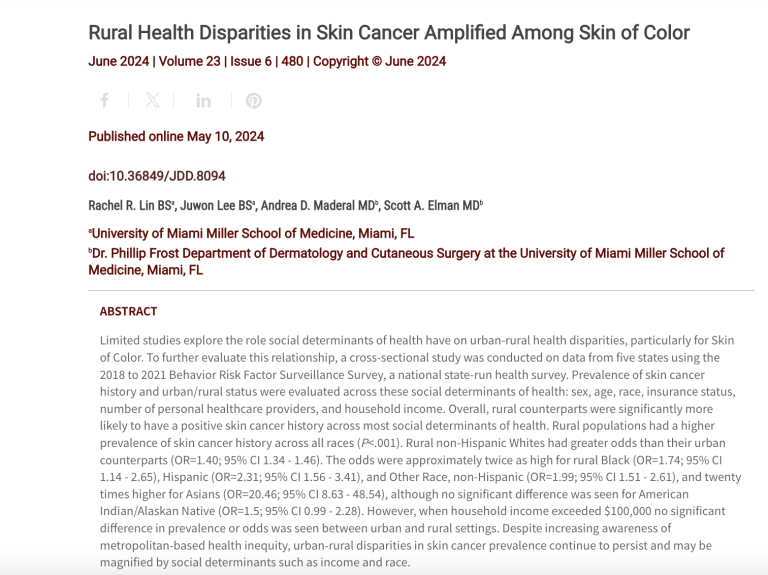
In this article from the JDD vault, authors analyzed 2018 to 2021 Behavior Risk Factor Surveillance Survey data from five states to examine the relationship between urban rural status and self reported skin cancer history across social determinants of health. The cross sectional study assessed sex, age, race, insurance status, number of personal health care providers, and household income.
The investigators found that rural respondents were significantly more likely to report a history of skin cancer across most social determinants of health. Rural non Hispanic White participants had higher prevalence than urban counterparts. Rural Black, Hispanic, and other non Hispanic race groups had roughly twice the odds of a positive skin cancer history compared with urban peers. Rural Asians showed a markedly higher odds ratio though sample sizes were small. No significant urban rural difference was observed for American Indian or Alaskan Native respondents. Notably, when household income exceeded one hundred thousand dollars the urban rural difference in prevalence was not seen.
For the dermatology HCP, this analysis underscores that urban focused equity conversations should not obscure persistent rural disparities. Rurality appears to compound risk patterns across racial and socioeconomic groups. Consider targeted screening and prevention strategies for rural populations, strengthened outreach to primary care and public health partners, expanded access to teledermatology, and community based education to improve detection and follow up for patients with skin of color.
Read the full JDD article for state level methods and subgroup details. Review your practice data for rural patients and patients with skin of color, prioritize targeted screening and outreach, and propose quality improvement or collaborative research projects to address rural skin cancer burden.
J Drugs Dermatol. 2024;23(6):480 doi:10.36849/JDD.8094
Blog write-up assisted by AI