
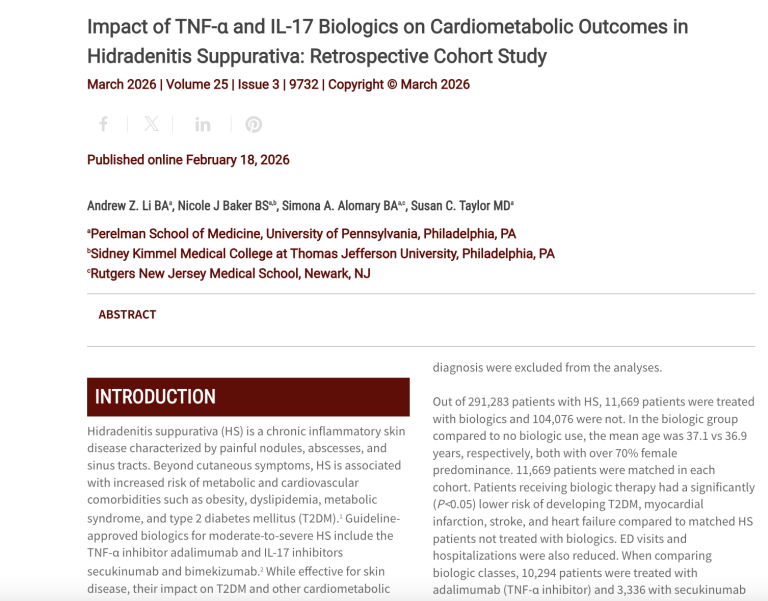
JDD study on biologics and cardiometabolic
Dive into this March article! A large retrospective analysis using the TriNetX research network examined adults with hidradenitis suppurativa who were treated with biologics compared with matched patients who were not. The authors report that biologic therapy, including adalimumab and IL-17 inhibitors such as secukinumab and bimekizumab, was associated with a lower incidence of new onset type 2 diabetes and fewer cardiovascular events including myocardial infarction, stroke, and heart failure, as well as reduced emergency department visits and hospitalizations. A secondary comparison suggested that patients receiving IL-17 inhibitors had lower rates of several cardiometabolic outcomes compared with those on TNF-alpha inhibition.
The study leverages a large real world database and broad patient numbers, but it relies on administrative coding and does not measure medication adherence or establish causation. These findings are associations that raise questions about whether biologic selection in HS could influence systemic cardiometabolic risk, and they point to the need for prospective studies to clarify mechanisms and confirm clinical benefit.
Read the full JDD article for cohort details and analytic methods and consider whether these observations should prompt discussion about cardiometabolic risk assessment and biologic selection in your HS patients.
J Drugs Dermatol. 2026;25(3). doi:10.36849/JDD.9732
Blog write-up assisted by AI