
Practical imaging security for dermatologists: encryption, secure storage, metadata hygiene and device protocols
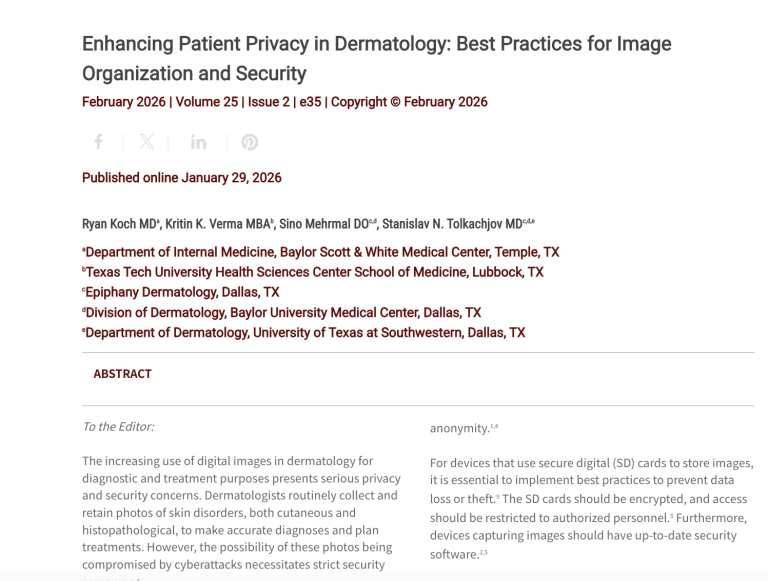
In this Letter to the Editor published in the February issue of the Journal of Drugs in Dermatology, it showcases how digital photos are central to modern dermatology, but routine formats like JPEG and TIFF offer no built‑in protection, making clinic image libraries attractive targets for cyberattack. This letter reminds clinicians that every clinical and histopathology photo should be treated as protected health information: encrypt files and use password protection, store images on HIPAA‑compliant servers or end‑to‑end‑encrypted cloud services, and avoid keeping sensitive photos on personal devices unless those devices are fully encrypted and support remote wipe. If smartphone images are necessary, upload to secure storage immediately and delete the local copy. Don’t forget metadata: embedded timestamps, device details and geolocation can identify patients, so disable location services and strip metadata when possible. Practical workflow steps include anonymized, nonidentifying file names, encrypted SD cards, restricted access controls, up‑to‑date device security software, and clear clinic policies with staff training on image handling.
Read the full letter for implementation specifics and then audit your clinic’s imaging practices today, like updating storage solutions, refining naming and metadata workflows, training staff, and confirming vendor HIPAA compliance to reduce risk and protect patient privacy.
J Drugs Dermatol. 2026;25(2): doi:10.36849/JDD.9297
Blog write-up assisted by AI