
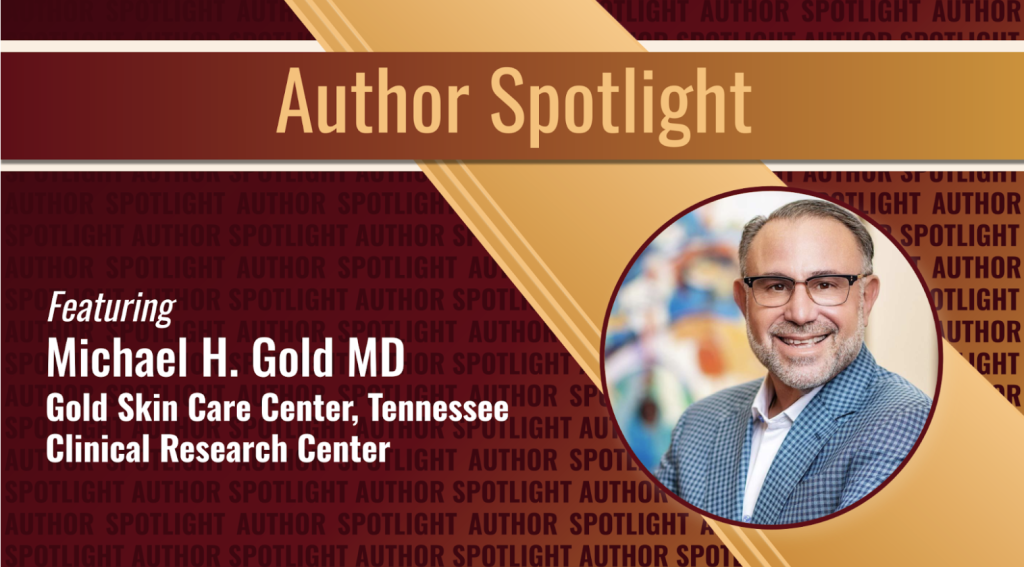
Our current Author Spotlight features Michael H. Gold MD, one of the co-authors of “Exosomes in Cosmetic Dermatology: A Review of Benefits and Challenges,” published in JDD’s January 2026 issue. In addition to his article, Dr. Gold also answered questions about the current state of dermatology and how the field is adapting to new advances in technology and treatments.
In your experience, what is one commonly overlooked factor in diagnosing or managing a specific skin condition that you think deserves more attention?
I think we are constantly looking for ways to reverse skin aging and to improve our post-care aesthetic treatments. The article we published deals with exosomes and how they may play an important role in reversing skin aging, improving post-procedure care, and even in improving alopecia in many of our patients. The most interesting thing about all of this is that there are no currently available FDA-approved exosomes in the US and we are using them currently as cosmeceuticals, which can only be topically applied and clinical trials, although becoming more and more common, are lacking with many of the currently available products so clinicians must be careful to only use those that have such trials and have peer-reviewed publications.
Of all your research findings, are there any surprising or unexpected results that changed your perspective on the topic?
At first, I thought this whole topic of exosomes was some sort of fad – that it would not withstand the rigor of dermatologists who constantly rely on evidence-based medicine to make rational decisions on what we use and recommend to our patients. Over the past five plus years, we have seen a global explosion in their use and potential benefits for our patients and this has been exciting and something that I did not think would happen. Again, using them in an appropriate manner with reliably sourced exosomes still remains the key and more clinical work is ongoing and needs to be done to further document these potential incredible opportunities.
Are there any misconceptions among dermatologists or patients about a specific treatment or condition that you’d like to address?
I think with exosomes the biggest misconception is that all exosomes are the same. They differ based on the source, the manufacturing process, and having what we call Unted States FDA or good manufacturing practices (GMP) in place. This is true for some but not all of the products in this space and so again, one must ask the hard questions, speak to colleagues, and see what clinical work that a specific company has to determine if that exosome is “real” or not.
What is a piece of advice you wish you had received earlier in your dermatology career?
Ask questions and never just accept what is presented to us is always the right answer. And speak to your friends and colleagues when you have a question – don’t think you always know the answer. And if you are doing anything aesthetic, know that adverse events will occur – the good physicians are aware of them and know how to deal with them early if one arises in your patient – and inevitably we all see adverse events.
Outside of clinical practice and research, what excites you most about the future of dermatology?
We are in the most blessed space in all of medicine and we never should take that for granted. We have new medicines and new therapies for skin diseases that we never dreamed were possible and now are a reality. We can make people better more effectively than ever before and we can change lives – which is what this is all about.