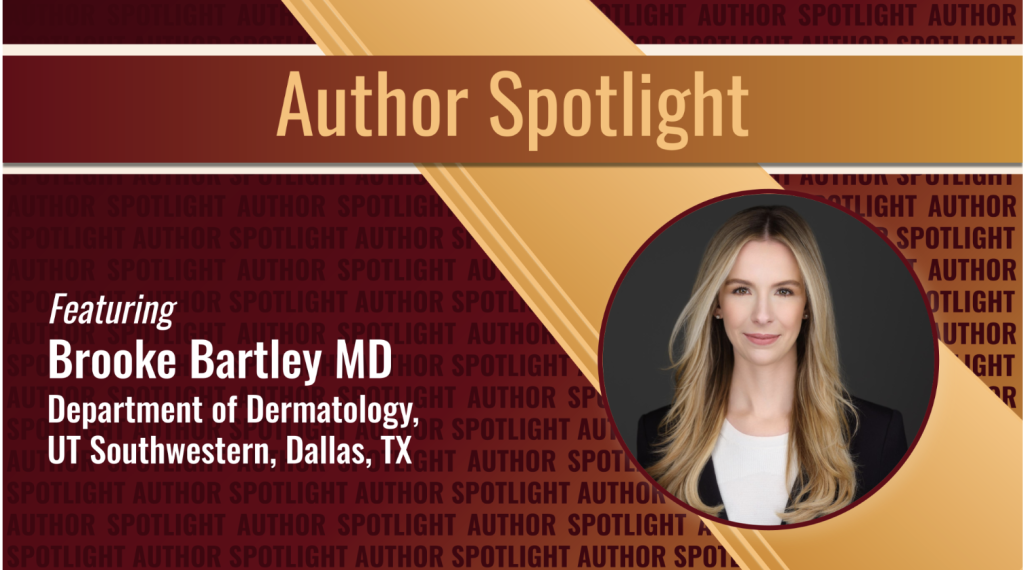
Our current Author Spotlight features Brooke Bartley MD, one of the co-authors of Efficacy and Safety of Cosibelimab for Advanced Cutaneous Squamous Cell Carcinoma: An Expert Consensus Panel, published in our May 2026 issue. In addition to his article, Dr. Bartley provided his insight about the current state of dermatology and how the field is adapting to new advances in technology and treatments.
In your experience, what is one commonly overlooked factor in diagnosing or managing a specific skin condition that you think deserves more attention?
A commonly overlooked challenge in managing advanced cutaneous squamous cell carcinoma is that many patients are older, medically complex, or have autoimmune disease, groups often underrepresented or excluded from clinical trials. This highlights the need for robust real-world evidence to better define treatment benefit and safety in the populations we actually see in practice.
Of all your research findings, are there any surprising or unexpected results that changed your perspective on the topic?
One of the most striking findings was the absence of grade 4 or 5 immune-related adverse events with cosibelimab across available studies, which highlights a potentially meaningful shift toward immunotherapy with less severe side effects without compromising efficacy.
How do you see artificial intelligence and digital dermatology evolving in clinical practice over the next five years?
Artificial intelligence is going to be a great supplemental tool to dermatologists in clinical practice, but it has a long way to go. I do not see it replacing the clinical expertise and human interaction that are critical to patient care. My hope is that it helps physicians of all kinds reduce the number of tasks that take away from direct patient care, which would help reduce burnout, increase time spent with patients, and improve patient satisfaction with each experience.
What is a piece of advice you wish you had received earlier in your dermatology career?
One piece of advice I wish I had received earlier is to find mentors who truly invest in you and believe in you and your work. Strong mentorship can shape your career in ways you cannot anticipate, and I am deeply grateful to mentors like Dr Darrell Rigel, Dr Joseph Merola, Dr Alice Gottlieb, Dr Stephen Tyring, Dr Peter Rady, the exceptional colleagues on this consensus panel, and so many more who have guided my journey.
Outside of clinical practice and research, what excites you most about the future of dermatology?
What excites me most is the rapid advancement of therapeutics across dermatology, from cutaneous oncology, as seen in this manuscript, to atopic dermatitis, psoriasis, hidradenitis suppurativa, and so many other areas, as we move beyond symptom control toward true disease modification and, in some cases, remission. I am amazed by how dermatology continues to pursue higher standards of efficacy and safety to better align treatment outcomes with patients’ needs and expectations.