
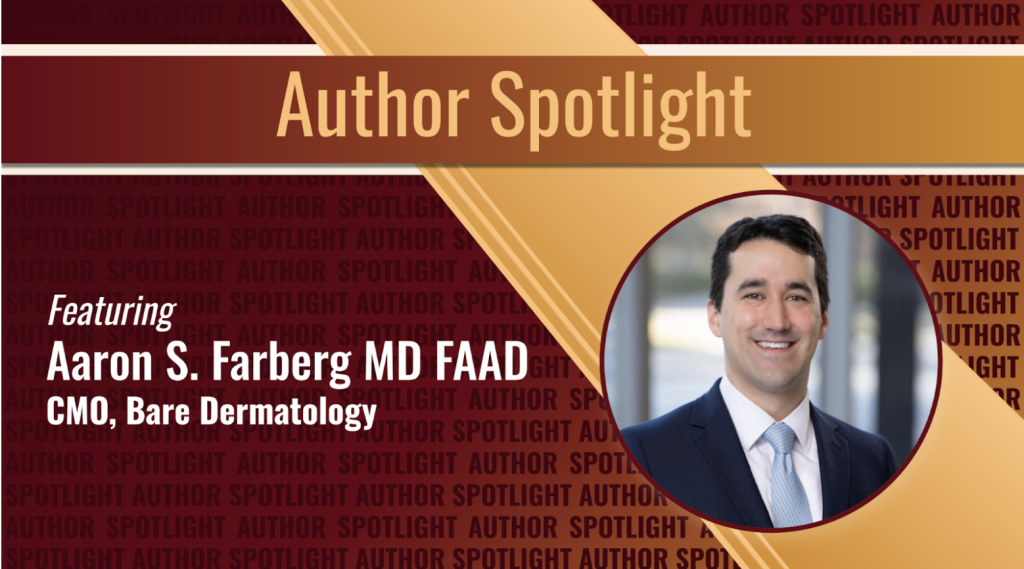
Our current Author Spotlight features Aaron S. Farberg MD FAAD, one of the co-authors of “Cutaneous Adverse Events Associated With GLP-1 Receptor Agonists: A FAERS Database Analysis From 2018-2024,” published in JDD’s January 2026 issue. In addition to the article, Dr. Farberg also answered questions around the current state of dermatology and how the field is adapting to new advances in technology and treatments.
In your experience, what is one commonly overlooked factor in diagnosing or managing a specific skin condition that you think deserves more attention?
One of the most overlooked factors in dermatology is how differently common diseases present on darker skin tones, which leads to underdiagnosis, misdiagnosis, and more severe disease at presentation for many conditions. Social determinants of health—such as income, education, housing, and insurance status—then compound these disparities by delaying access to care and limiting treatment options.
Of all your research findings, are there any surprising or unexpected results that changed your perspective on the topic?
Given the number of cutaneous adverse events associated with GLP-1 receptor agonists, we as dermatologists are well-prepared to help our medical colleagues and many patients currently being treated with these therapies.
How do you see artificial intelligence and digital dermatology evolving in clinical practice over the next five years?
AI and digital tools are likely to be deeply embedded in everyday dermatology over the next five years. AI systems are already improving melanoma detection, triaging lesions, monitoring chronic conditions through image analysis, and reducing unnecessary biopsies, with early deployments in virtual care and teledermatology.
If you could implement one immediate policy change to improve dermatologic care on a broader scale, what would it be and why?
Incentivize independent private practices. Hospital systems and academic centers have dominated healthcare to the detriment of the system.
Are there any misconceptions among dermatologists or patients about a specific treatment or condition that you’d like to address?
An important public misconception is that conditions like psoriasis, eczema, or acne are “mild” quality-of-life issues, when research shows profound impacts on employment, mental health, and overall health outcomes.
How do you navigate the challenge of balancing efficacy and accessibility when recommending treatments to patients from diverse backgrounds?
The most effective strategy is tiered treatment planning. Start with evidence-based, affordable first-line options, then clearly explain alternatives and trade-offs. I incorporate patient preferences, lifestyle, and financial constraints early. Shared decision-making improves outcomes more reliably than prescribing the “strongest or most expensive” option.
If you could collaborate with any other specialty or field to advance dermatologic research, which would it be and why?
I would collaborate within the field of behavioral science and psychology. I believe understanding habit formation, risk perception, and adherence could dramatically improve outcomes in chronic skin disease, often more than new drugs alone.
What is a piece of advice you wish you had received earlier in your dermatology career?
Building skills in communication, cultural humility, and advocacy is as critical as mastering histology or pharmacology for improving long-term outcomes.
Outside of clinical practice and research, what excites you most about the future of dermatology?
The convergence of several technologies promises faster diagnoses, more continuous disease monitoring, and “precision dermatology” tailored to each patient’s biology and environment. Genomic testing that offers patients the best therapy for them is the future.