INTRODUCTION
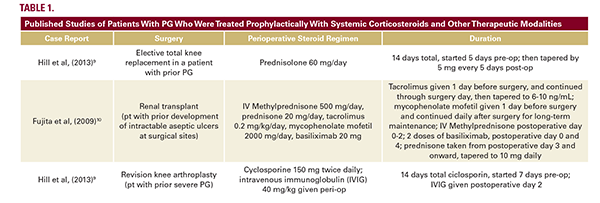
Pyoderma gangrenosum (PG) is classified as a neutrophilic dermatosis, often presenting as a rapidly enlarging ulcer and associated with inflammatory bowel disease (IBD), specifically ulcerative colitis and Crohn's disease (CD).1 The pathophysiology of PG stems from abnormal neutrophil activity and immune dysregulation, leading to uncontrolled inflammation, progressive tissue damage, and ulcer formation. PG is a rare skin condition, with a worldwide incidence of around 3 to 10 cases per million population per year,2 and its occurrence on the breast is less common.3 PG has been typically reported to occur after trauma and surgical procedures (Table 1).1,9,10
Recurrence of PG is a common finding after surgery, with a prior cohort study demonstrating an overall recurrence rate of 16.7%, irrespective of whether any perioperative intervention was included.4-6 There have been reported cases in which pre- and postoperative corticosteroids were used to prevent PG recurrence after surgery, many of which achieved successful outcomes.4-6 Currently, there is no gold standard regimen in preventing PG recurrence following surgery.7 We present a unique case of PG following multiple breast augmentation procedures and illustrate various therapeutic strategies to prevent recurrence during subsequent breast reconstruction.
Recurrence of PG is a common finding after surgery, with a prior cohort study demonstrating an overall recurrence rate of 16.7%, irrespective of whether any perioperative intervention was included.4-6 There have been reported cases in which pre- and postoperative corticosteroids were used to prevent PG recurrence after surgery, many of which achieved successful outcomes.4-6 Currently, there is no gold standard regimen in preventing PG recurrence following surgery.7 We present a unique case of PG following multiple breast augmentation procedures and illustrate various therapeutic strategies to prevent recurrence during subsequent breast reconstruction.