INTRODUCTION
Central Centrifugal Cicatricial Alopecia (CCCA) is characterized by progressive scarring and hair loss in the vertex or crown of the scalp and spreads centrifugally. CCCA is associated with inflammation and commonly affects women of African descent. Treatment goals include halting and preventing the progression of the disease and encouraging hair growth, but hair will not grow from permanently damaged hair follicles. No clear guidelines exist for the management of CCCA, and effective therapies remain limited. Xtressé is a commercially available nutrient supplement aimed to support hair growth. We present two cases of CCCA treated with Xtressé with notable improvement.
Case Presentations
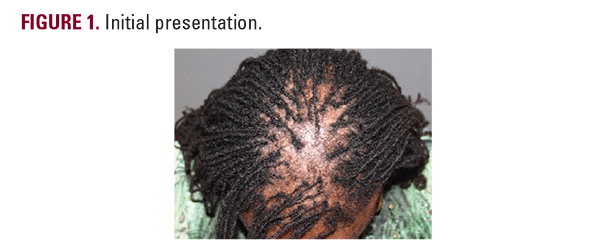
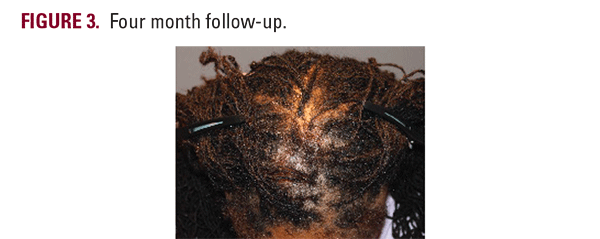
A 55-year-old African American female with a clinical and histopathologic diagnosis of CCCA presented with progressive hair loss (Figure 1). A biopsy performed at the right mid-crown revealed lymphocytic scarring alopecia, with a differential diagnosis including CCCA, lichen planopilaris, and contact dermatitis alopecia. Clinical correlation favored CCCA. She is currently treated topically with minoxidil, metformin, and clobetasol and advised to use bland, hypoallergenic, fragrance-free products; she received one treatment with intralesional triamcinolone. Two weeks after the biopsy, Xtressé nutrient supplements were added to the treatment regimen. Follow-up evaluations were conducted at 2 months (Figure 2) and 4 months (Figure 3) after initiating this plan.