
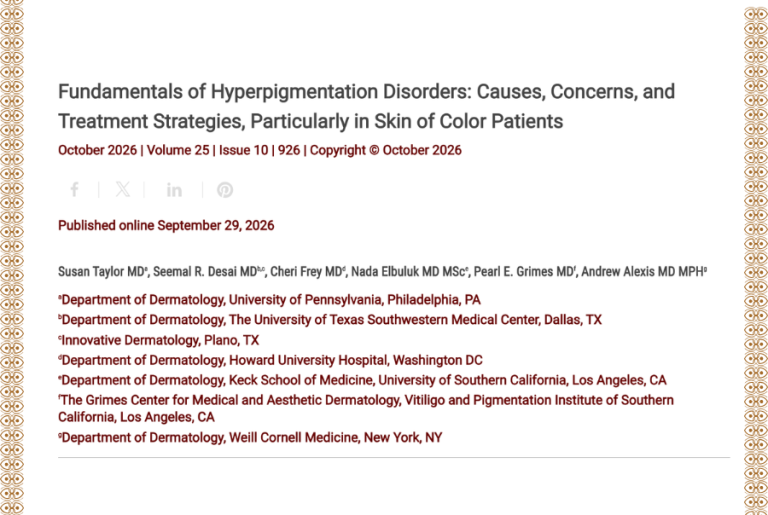
Bridging the Evidence Gap in Skin of Color Hyperpigmentation
This is a must-read article from the Journal of Drugs in Dermatology (JDD) that every practicing clinician should have on their radar. Hyperpigmentation remains one of the most common and challenging clinical presentations among individuals with skin of color (SOC). While our understanding of these pigmentary disorders has expanded rapidly in recent years, significant gaps still exist in epidemiological data, targeted pathophysiology-driven treatment strategies, and equitable representation of Fitzpatrick skin types III through VI within clinical research studies.
A recent comprehensive review of literature spanning from 2000 to 2026 highlights how our scientific understanding has evolved far beyond basic melanocyte hyperactivity. Researchers found that visible light acting via opsin-3 signaling, systemic hormonal and inflammatory cascades, and dermal microenvironment changes all play significant roles in disease persistence and treatment resistance. The findings emphasize why comprehensive photoprotection against both ultraviolet radiation and visible light is so crucial in daily clinical practice.
Furthermore, current clinical and meta-analytic evidence strongly supports a multimodal therapeutic strategy, aligning with recent international consensus guidelines. Given the profound quality-of-life impact hyperpigmentation inflicts across diverse patient populations, addressing these nuances in routine clinical assessments is essential. However, diagnostic tools and emerging machine-learning algorithms frequently underperform when applied to darker skin tones, underscoring the urgent need for inclusive trial design and standardized outcome measures.
To discover the full breakdown of multimodal treatment protocols, emerging pathophysiologic mechanisms, and international consensus recommendations, dive into the full manuscript in the latest issue of JDD.
Blog write-up assisted by AI