
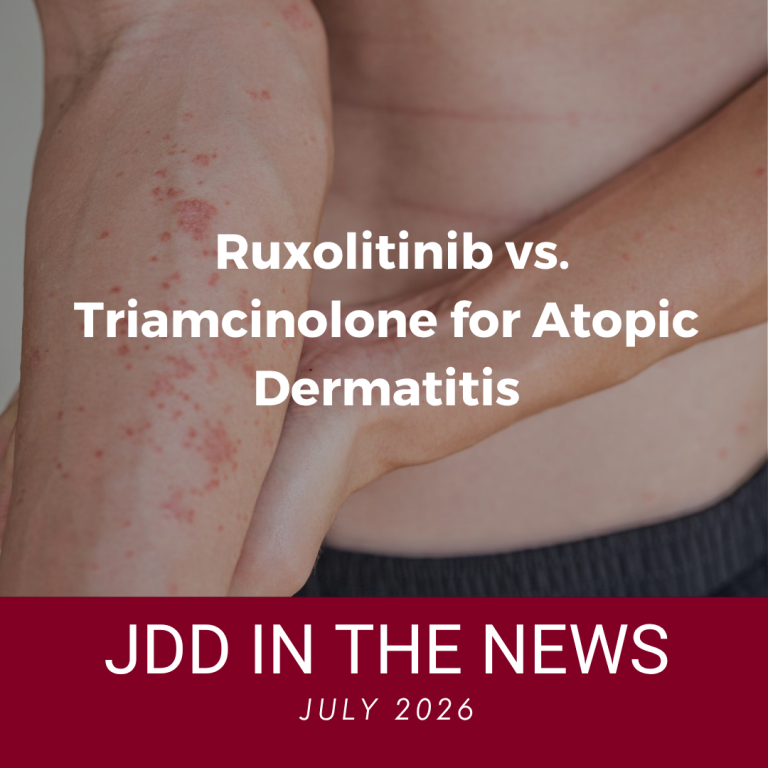
MedPage Today/Dermatology World Weekly highlighted a Journal of Drugs in Dermatology study comparing a topical JAK inhibitor with a common topical steroid in atopic dermatitis (AD). The study, “Ruxolitinib Cream Versus Triamcinolone Cream in Adults With Mild to Moderate Atopic Dermatitis,” shared results from a phase 2, randomized, dose-ranging study. Participants
with mild to moderate AD for at least two years applied either 1.5% ruxolitinib cream twice daily for 8 weeks or 0.1% triamcinolone cream twice daily for 4 weeks. (The triamcinolone treatment period was shortened for steroid safety.) Substantially more patients who applied ruxolitinib cream achieved at least 75% or 90% improvement in the Eczema Area and Severity Index at week 4 as well as an Investigator’s Global Assessment Score of 0/1 with at least a 2-grade improvement from baseline. Additionally, significantly more ruxolitinib patients achieved at least
a 2-point improvement in the itch numerical rating scale on day 2 as well as at least a 4-point improvement at week 4. The investigators note that ruxolitinib cream was well tolerated with no clinically significant reactions at the application sites. They posit that ruxolitinib cream’s efficacy is comparable with a midpotency topical corticosteroid without any potential safety concerns from the long-term use of corticosteroids.
The Dermatology Digest’s July/August edition includes a brief about a JDD study on injuries from wigs, hair pieces, and toupees. The study, “A Decade of Hair Prosthetic Injuries: A Review of United States Emergency Department Cases (2013-2022),” analyzed cases reported to the National Electronic Injury Surveillance System, which collects data from a nationally representative cohort of 100 hospital emergency departments. Eighty-eight injury cases were analyzed. The most common diagnoses were dermatitis, lacerations, and contusions. During
the time frame, injuries increased by 56% overall. Most patients were female and either Black (53%) or White (10%). White women more frequently experienced hair prosthetic injuries compared with White men. The researchers write that this data shows more culturally competent education on safe use of hair prosthetics is needed in Black women, and that future advocacy efforts should address wig testing, allergy testing, and safe removal practices.
Healio profiled a JDD study on a topical treatment for acanthosis nigricans (AN), a condition with no FDA-approved treatment option. The study, “Evaluating the Safety and Efficacy of Sirolimus Topical Gel 0.2% to Treat Acanthosis Nigricans,” provided results from a 12-week phase 2 pilot study. Five adults with AN applied sirolimus gel 0.2% twice a day. At the conclusion of the study, the participants showed a significant reduction in pigmentation with decreases in the Melanin Index and Acanthosis Nigricans Scoring Chart. Improvements were observable as early as week 4. Additionally, the participants showed improvements in their Dermatology Life Quality Index Scores. The only reported side effects were mild application-site
dryness and erythema. The investigators encourage larger randomized controlled trials to validate the findings.