
From the Vault: A New Frontier in Post-Surgical Healing and Graft Survival
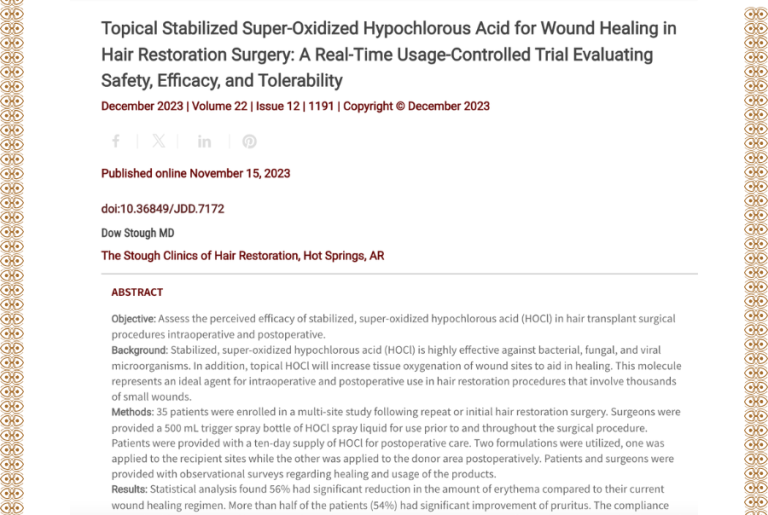
Have you checked out the intriguing study featured in a 2023 issue of JDD regarding hair restoration recovery? As hair transplant procedures continue to evolve with increasingly large numbers of implanted grafts, the demand for optimized intraoperative and postoperative wound care has never been higher for practicing clinicians.
A published multi-site study investigates how stabilized, super-oxidized hypochlorous acid (HOCl) performs when integrated into the surgical workflow. Known for its broad-spectrum antimicrobial efficacy against bacterial, fungal, and viral microorganisms, topical HOCl also introduces theoretical benefits regarding wound site tissue oxygenation. This makes the molecule a highly compelling option for managing the thousands of micro-wounds generated during modern hair restoration procedures.
The study monitored thirty-five patients across multiple clinical sites, tracking the intraoperative use of an HOCl spray as well as a specialized ten-day postoperative care regimen for donor and recipient areas. The subsequent investigator and patient surveys revealed highly promising advantages in patient compliance, along with notable improvements in common postoperative complications like erythema and pruritus.
Rather than relying on traditional wound healing protocols, this research sheds light on a major potential advance in surgical wound cleansing and tissue preservation. For dermatology healthcare professionals looking to optimize graft survival and elevate patient comfort, these findings could alter standard post-op protocols.
Check out the link below to read the full article and review the exact statistical breakdown and clinical data.
Blog write-up assisted by AI