
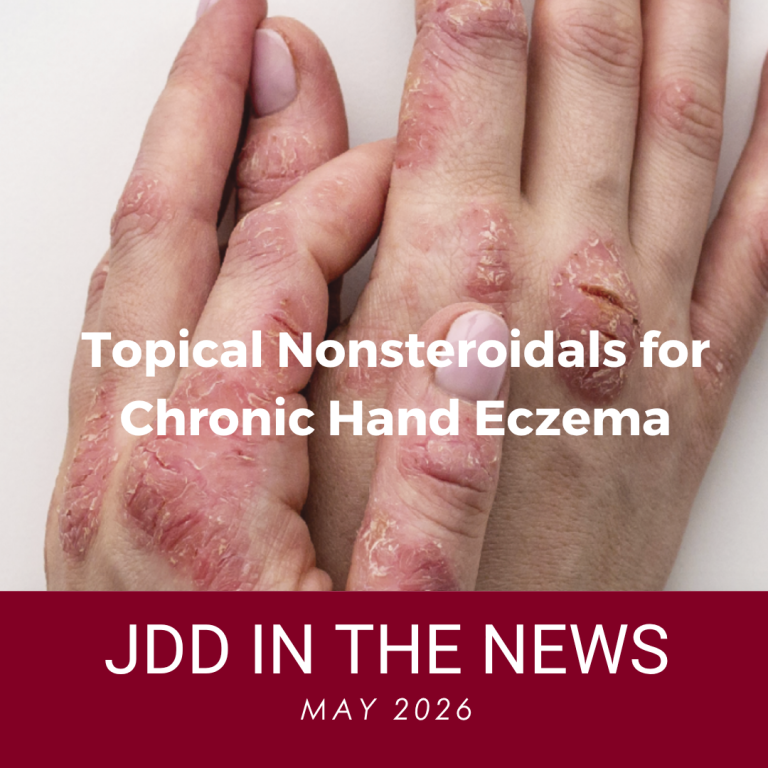
Physician’s Weekly interviewed dermatologist Geeta Yadav, MD, for her perspective on the March Journal of Drugs in Dermatology study, “Expert Consensus on Advanced Topical Nonsteroidal Therapies for Chronic Hand Eczema.” The study provides six consensus statements on using topical nonsteroidal therapies for chronic hand eczema (CHE). The panel conducted a structured literature review, evaluated the evidence through Strength of Recommendation Taxonomy, and refined the statements using the Delphi consensus process.
The statements address delgocitinib, the only approved topical for CHE. The statements state that delgocitinib is appropriate first-line advanced therapy, and that nonsteroidals provide quick and continued clinical improvements, and improve quality of life. Additional statements speak to work-related disability, comparison with alitretinoin, and safety and monitoring. In the
Physician’s Weekly commentary, Dr. Yadav says she largely agrees with the consensus statements and that they can help clinicians advocate for early treatment with delgocitinib, including with insurers.
Medscape Dermatology wrote about an April JDD study using Google Trends data to analyze patient interest in and access to dermatology care. The study, “Patient Interest in Dermatologists in the United States: A 20-Year Google Trends and Workforce Analysis,” is a first-of-its-kind exploration conducted by researchers at George Washington University’s School of Medicine and Health Sciences and Milken Institute School of Public Health. Using state-specific search data from Google Trends and data on the number of practicing dermatologists in
each state, researchers created a Relative Demand Index, taking into account population differences between states. Researchers found states with the greatest demand and need for dermatology care have the lowest access to that care. In addition, the researchers found substantial disparities in the availability of dermatology care and demand across states, and they recommend targeted strategies to ensure equitable access.
Healio profiled an April JDD study on program directors’ perspectives on the switch to pass/fail reporting for the United States Medical Licensing Examination (USMLE) Step 1. The study, “Objective Measures Needed: Dermatology Program Directors’ Perspectives on the USMLE Step 1 Pass/Fail Transition,” was conducted by researchers at the University of Alabama at Birmingham. Researchers found that, in lieu of a 3-digit Step 1 score, program directors looked to other objective measures to determine competency, notably Step 2 CK scores, clerkship
NBME shelf exam scores, class rank, and letters of recommendation. The authors note that, while the change to pass/fail was intended to promote a more holistic consideration of residency applicants, in reality the evaluation has simply shifted to other objective measures. The authors note that future reforms should seek to create a more equitable system.