
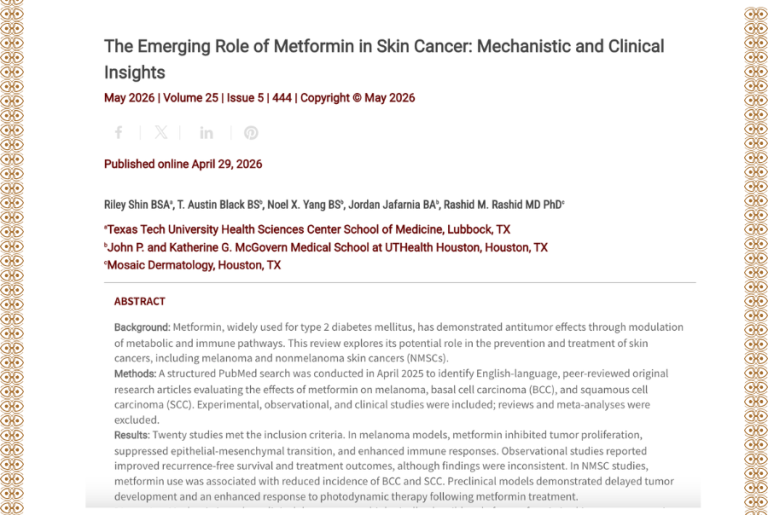
Metformin and Skin Cancer: Emerging Evidence for Dermatologic Oncology
If you are curious about metabolic agents in dermatologic oncology this JDD article is a must read. A new review synthesizes preclinical, observational, and clinical studies exploring metformin as a potential preventive and adjunctive therapy for skin cancer. The authors examined the literature through April 2025 and highlight mechanistic data alongside early clinical signals that merit attention from practicing dermatologists and dermatology healthcare professionals.
In laboratory models metformin has been reported to reduce tumor proliferation, blunt epithelial to mesenchymal transition, and modulate immune responses. Observational studies suggest associations between metformin use and lower incidence of basal cell carcinoma and squamous cell carcinoma, and some reports indicate improved recurrence free survival in melanoma patients, although clinical findings are inconsistent. Notably, the review finds the strongest translational rationale for basal cell carcinoma, including enhanced responses to photodynamic therapy in preclinical work, while melanoma studies point toward possible synergy with immunotherapy but variable clinical outcomes.
The review frames metformin as a low cost, generally well tolerated candidate for further investigation in dermatologic oncology, but it stops short of recommending clinical adoption without prospective, controlled trials to clarify dosing, patient selection, and real world efficacy. For clinicians interested in the intersection of metabolic agents and skin cancer management this article outlines where evidence is most robust and where gaps remain.
Read the full JDD review to evaluate the study selection, outcomes, and limitations before considering implications for practice or research.
Blog write-up assisted by AI